





Introduction: Why Tuscan villages are essential subjects for photography
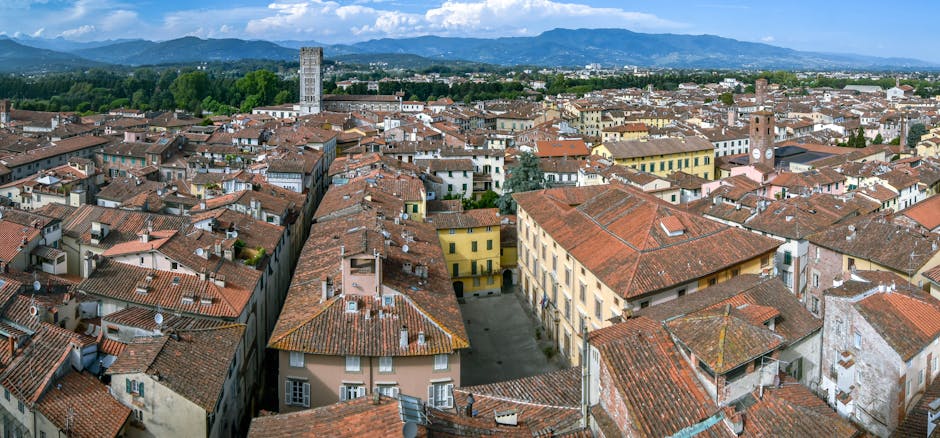
Tuscany has long been synonymous with dreamlike landscapes — cypress-lined hills, neatly ordered vineyards and hilltop villages where every stone tells a story. Photographing Tuscan villages is more than just capturing a postcard: it’s about freezing the soul of a place where medieval architecture meets a mild climate and a rich culinary and wine culture. This guide is for travelers, hobbyists and pro photographers who want to capture, frame by frame, the essence of the most photogenic Tuscan villages, offering practical details (exact addresses, opening hours, admission prices) and hands-on tips — both technical and local — to help you get the shots you’re after.
In the pages that follow you’ll find a selection of iconic villages — San Gimignano, Pienza, Montepulciano, Montalcino and Volterra — chosen for the variety of photographic subjects they offer: medieval towers, stone alleys, panoramic squares, sunflower fields and age-old vineyards. Each section gives precise waypoints (full place names, exact addresses), recommended time windows for best light, entrance fees where applicable and immersive descriptions to help you spot the details that matter: wall textures, shadow plays on stairways, facades lit by the setting sun, local markets and village cafés where you can capture everyday life.
Beyond practical info, this guide includes gear recommendations (lenses to favor, settings for golden light, tripod use), etiquette tips (service times at churches, private areas, drone restrictions) and strategies to dodge crowds (calm hours, alternative routes). You’ll also find indicative prices in euros for paid attractions — helpful for planning your photo budget — and opening hours current at the time of writing. Addresses are listed precisely to make GPS navigation easier, and each village comes with a mini photographic itinerary: where to position yourself at sunrise, which framings produce dynamic compositions, and how to include people to give scale and narrative to your images.
Any useful Tuscan photo guide should include visual signposts: this text contains image cues to inspire the scenes to hunt for and reproduce. The keywords paired with those images are chosen for image-bank searches (Pexels, Unsplash, Pixabay) and to spark ideas before your trip. Whether it’s a tall medieval tower blazing in sunlight, a bench under a plane tree in the main square, or a trattoria table with a carafe of Chianti, each scene has its own narrative and aesthetic potential.
So pack your camera bag, check your battery life, print or load the site addresses and let the intimate light and character of Tuscan villages guide you. The sections below detail, village by village, concrete spots to photograph, exact addresses, prices and hours, plus local and technical tips to turn a simple snapshot into a lasting, evocative memory.
San Gimignano: medieval towers and alleys that tell a story
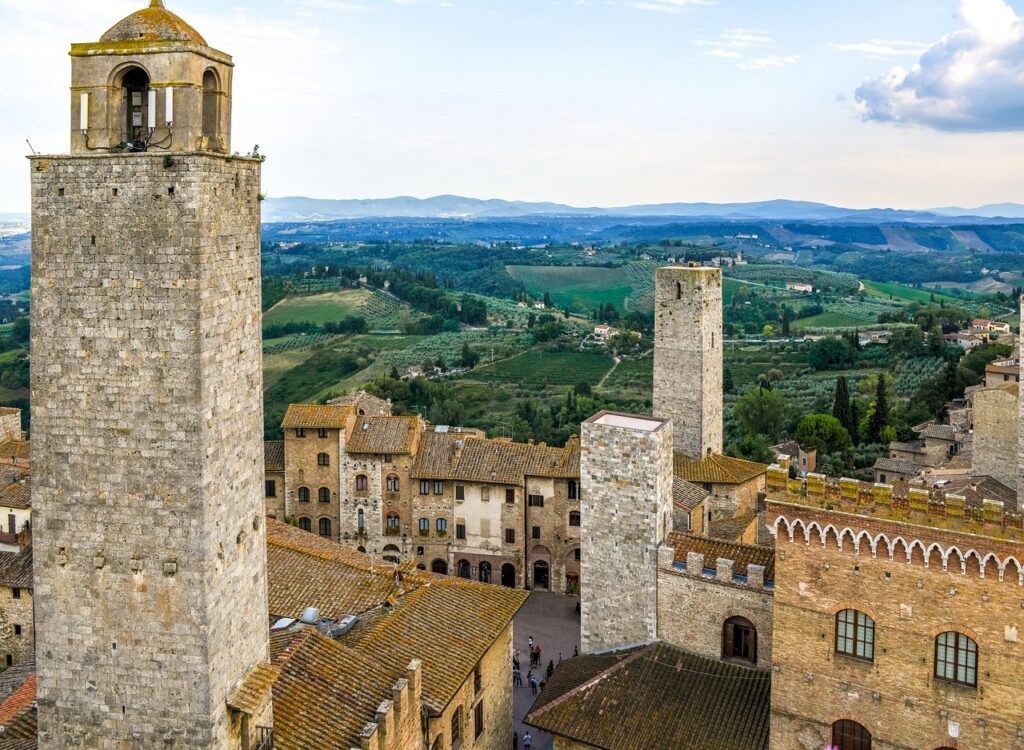
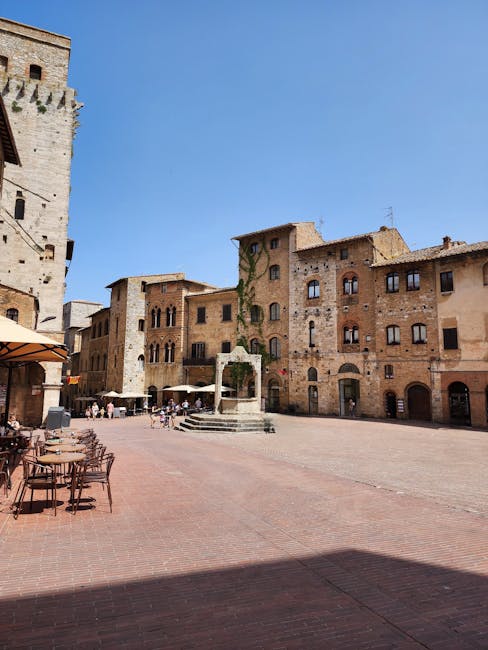
San Gimignano, often called the “Manhattan of the Middle Ages,” is famous for its slender towers piercing the skyline. The historic center is compact and ideal for street, architectural and landscape photography. Start at Piazza della Cisterna (Piazza della Cisterna, 53037 San Gimignano SI, Italy), a triangular cobbled square lined with medieval buildings and small shops. The medieval well in the center makes an excellent focal point for symmetrical compositions.
For a vantage point above the village head to Torre Grossa (Torre Grossa, Piazza del Duomo, 1, 53037 San Gimignano SI, Italy). Fee: around €9.00 per adult (indicative — check the official site). Hours: typically 10:00–19:00 (seasonal variations apply; sometimes closing at 17:00 in low season). From the Torre Grossa terrace you get a 360° panorama of the Tuscan hills — an ideal spot to photograph the tower silhouettes at sunrise or sunset. Note: access is via a narrow staircase — tripods are rarely allowed inside.
Don’t miss the Cathedral of San Gimignano, Duomo di San Gimignano (Piazza del Duomo, 2, 53037 San Gimignano SI, Italy). Entry to the cathedral and its surrounding museums is via a combined ticket for the Museo Civico and the Collegiata, roughly €9–12; typical hours: 10:00–18:00. The interior frescoes offer opportunities for architectural interior photography (ask permission and avoid using flash).
Photo tips: to capture the verticality of the towers, use a wide-angle lens but correct perspective in post to avoid distortion. The stone alleyways gain incredible texture during the golden hour when low light accentuates relief. For environmental portraits, scout cafés on Via San Giovanni and Via San Matteo where local life provides natural interactions. If you want shots with fewer people, arrive before 09:00: tour buses typically arrive after 10:00, quickly filling the main squares.
Restaurants and desserts to photograph: Gelateria Dondoli (Piazza della Cisterna, 4, 53037 San Gimignano SI, Italy) is famous for its inventive flavors. Average price for a cone or cup: €3.50–5.00. Photograph the texture of the gelato and bright colors against the warm ochre facades. For a glass of wine with a view, Osteria delle Catene (Via S. Matteo, 1, 53037 San Gimignano SI, Italy) offers local wines — a glass of Vernaccia di San Gimignano costs about €6.00–8.00.
Pienza and the Val d’Orcia: pastoral landscapes and Renaissance lanes
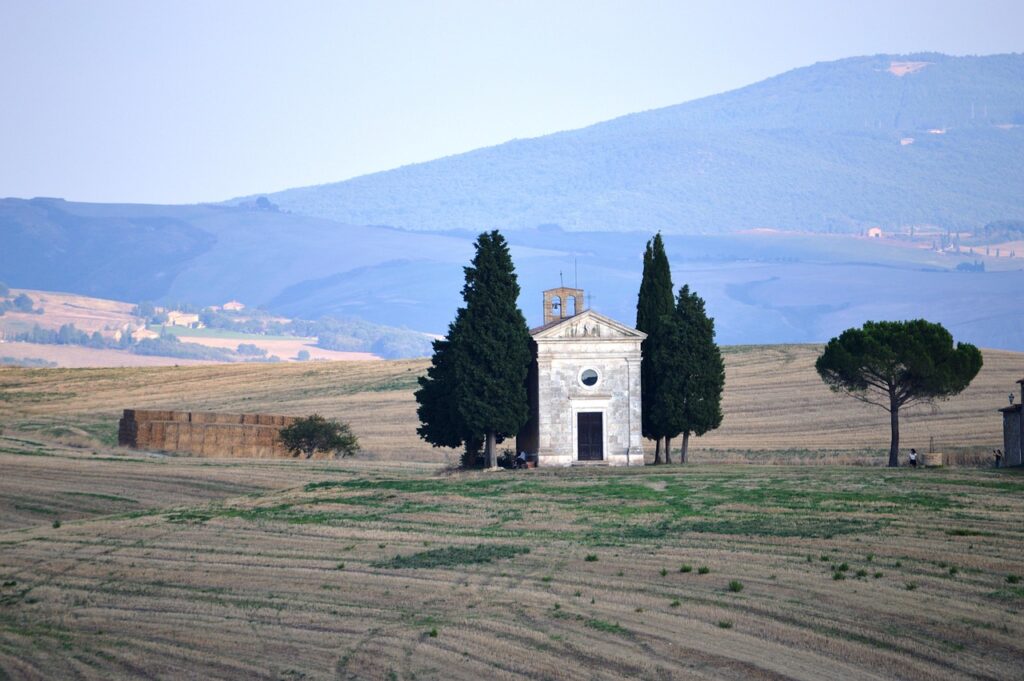
Pienza, located in the heart of the Val d’Orcia (Piazza Pio II, 53026 Pienza SI, Italy), is a small Renaissance town designed under Pope Pius II. Its harmonious urban layout, stone facades and viewpoints over the surrounding countryside make it a prime spot for landscape, architecture and food photography. The nerve center is the splendid Piazza Pio II (Piazza Pio II, 53026 Pienza SI, Italy), home to the Cathedral (Cattedrale dell’Assunta) and the Palazzo Piccolomini (Via del Castello, 53026 Pienza SI, Italy).
Palazzo Piccolomini has gardens and balconies that overlook the Val d’Orcia; exact address: Palazzo Piccolomini, Via del Castello, 1, 53026 Pienza SI, Italy. Fee: museum and garden visits around €6–8. Hours: generally 09:00–18:00, varying by season. From the belvedere on Via dell’Amore (a pedestrian path near the center) you’ll get charming perspectives of rolling hills, cypress lines and plowed fields. These repeating patterns are perfect for minimalist, graphic compositions.
Pienza is also famous for pecorino cheese: La Bottega del Formaggio (Via Roma, 18, 53026 Pienza SI, Italy) offers tastings and sales. Guided tasting price: roughly €5–10. Photographing a cheese board, the cheesemonger’s hands, labels and the jars glowing behind the counter makes for very “local” and appetizing images.
Photo tips: for panoramas use a focal length between 24mm and 70mm; a polarizer helps saturate the sky and reduce reflections on windows. Morning light (between 07:00 and 09:30) bathes the ochre facades in a remarkably soft glow. For architectural details and textures, get close to window frames, ironwork and weathered stones. At night the central square is lit up and works well for long exposures — check local rules about tripod use (often tolerated but use it discreetly).
Access and parking: Pienza has a public car park at Piazzale Europa (Piazzale Europa, 53026 Pienza SI, Italy) with variable rates; expect about €1.50–2.50 per hour in tourist season. In high season, arrive early to avoid crowded parking and to enjoy softer light on the surrounding hills.
Montepulciano and the vineyards: wine, stairways and golden light
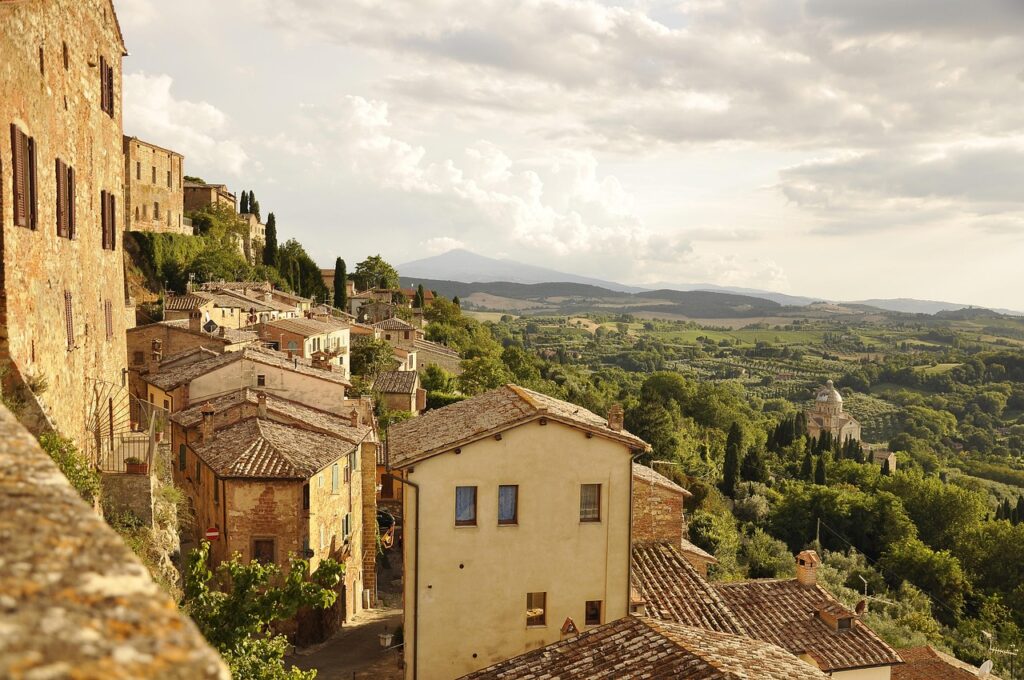
Montepulciano (Piazza Grande, 53045 Montepulciano SI, Italy) is a hilltop gem known for its sloping streets, stone steps and, above all, its Vino Nobile di Montepulciano. Piazza Grande is the heart of the old town and provides a spectacular backdrop for architectural and urban scenes. Start by photographing Palazzo Comunale (Piazza Grande, 1, 53045 Montepulciano SI, Italy) and the steps that lead to sweeping countryside views.
For a wine-focused photo experience book a cellar tour: Cantina Contucci (Via San Donato, 4, 53045 Montepulciano SI, Italy) offers visits and tastings for €15–30 per person depending on the package (tastings of 3 to 5 wines). Hours: generally 10:00–18:00, but reservations recommended. The vaulted cellars, oak barrels and diffuse cellar light create atmospheric images in demand. Photograph labels, glasses at a window ledge and the wood grain of the barrels.
Viewpoints: for countryside panoramas head to Terrazza di via di Gracciano nel Corso, accessible from Via Gracciano nel Corso; the alignment of roofs and towers framed by cypresses works particularly well in a horizontal format. For intimate compositions explore small cross squares and artisan workshops (via del Teatro, via di Cagnano). Whitewashed facades and colorful shutters provide a soft counterpoint to Tuscan light.
Technical tips: to capture wall textures favor side light at sunrise. A fast 50mm lens is great for environmental portraits of winemakers and shopkeepers. If you shoot Piazza Grande in the evening, the streetlights create hot spots in compositions: experiment with longer exposures (1/15 to 1/2 s) to include a sense of motion without excessive blur.
Transport and accommodation: Montepulciano has outer parking lots such as Parking Porta al Prato (Via della Fratta, 53045 Montepulciano SI, Italy), roughly €1.00–2.00 per hour. For an extended photo stay consider an agriturismo with vineyard views, like Agriturismo La Canonica (Località La Canonica, 78, 53045 Montepulciano SI, Italy) — rooms from around €80–120 per night depending on season. Photograph breakfast areas, light through shutters and early-morning lanes lined with lavender or cypresses.
Montalcino and the fortress: panoramas, Brunello and small details
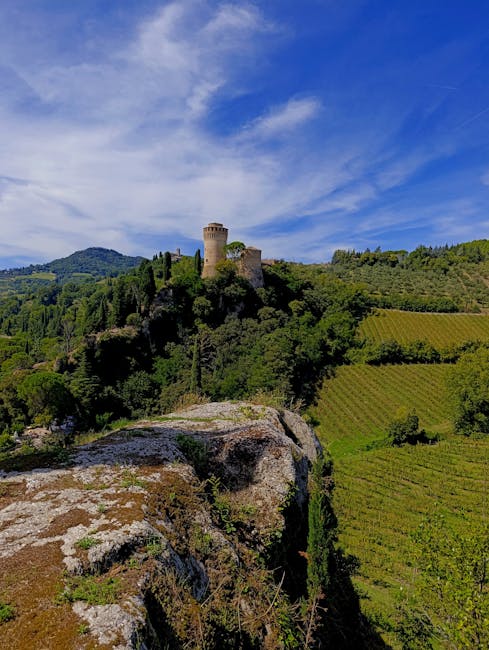
Montalcino (Piazza del Popolo, 1, 53024 Montalcino SI, Italy) is world-famous for Brunello di Montalcino. The village offers sweeping views from the Fortezza di Montalcino and plenty of opportunities for wine- and terroir-centered photography. Fortezza di Montalcino (Piazza del Popolo, 1, 53024 Montalcino SI, Italy) is a 14th-century fortress; entrance to walk the ramparts is free, though some events or exhibitions inside may have fees (€5–10 depending on the event). Fortress access hours: usually 09:00–19:00, varying by season.
For wine photography consider Cantina Biondi Santi (Via della Fattoria, 1, 53024 Montalcino SI, Italy) or a visit to Caparzo (Località Poggio al Vento, 13, 53024 Montalcino SI, Italy). Tours and tastings typically cost €15–40 per person depending on number and rarity of wines offered. Photograph a tasting sequence, hands pouring Brunello, reflections in the glass and the aged labels — all highly photogenic subjects.
Photo viewpoints: the belvedere on Via di Sant’Angelo and the fortress walkway offer wide panoramas of the surrounding hills. Vine rows in spring and autumn create repeating patterns ideal for composition. Montalcino’s small streets with wooden doors, wrought-iron signs and stone steps are perfect for a detail-focused series.
Local advice: in high season book wine tastings in advance (especially at renowned estates). Respect cellar photography rules: flash is often prohibited and ask permission before photographing staff at work. For panoramic shots, an hour before sunrise can produce a misty atmosphere over the valley, adding depth. If you carry photo gear into wineries, use a discreet bag and make sure you have basic insurance.
Volterra and Etruscan art: ancient stones and a mysterious atmosphere
Volterra (Piazza dei Priori, 1, 56048 Volterra PI, Italy) is a village with a rich Etruscan and medieval past. Its center retains a slightly austere character, ideal for dramatic black-and-white shots or richly saturated color work. The heart of Volterra is Piazza dei Priori (Piazza dei Priori, 56048 Volterra PI, Italy), dominated by the Palazzo dei Priori, one of Tuscany’s oldest town halls.
For archaeology and heritage lovers the Museo Etrusco Guarnacci (Via Porta all’Arco, 2, 56048 Volterra PI, Italy) houses an exceptional collection of urns and Etruscan objects. Fee: about €8 per person; hours: 09:00–19:00 (variable). Details of ancient artifacts, the patina on stone and the filtered light inside the galleries offer chances for delicate, narrative compositions.
Don’t miss Porta all’Arco (Porta all’Arco, 56048 Volterra PI, Italy), a well-preserved Etruscan gate, perfect for detail shots showing texture and ancient construction. Volterra’s alabaster workshops (numerous in town) often offer demonstrations; for example Bottega dell’Alabastro (Via Gramsci, 5, 56048 Volterra PI, Italy) frequently opens to visitors. Photograph the shaping of alabaster, fine shavings and the translucent sheen of the material under side light.
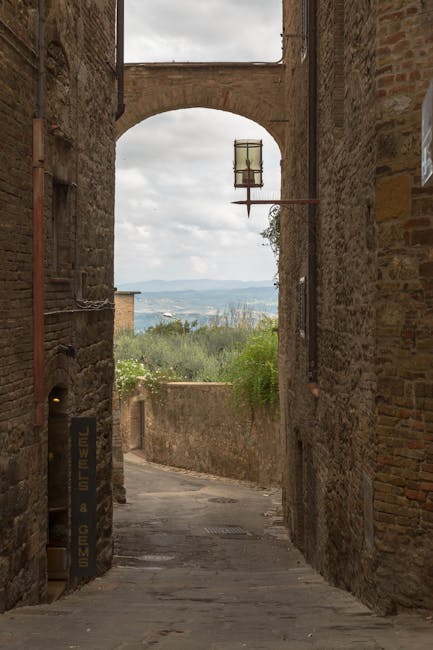
Photo tips: Volterra works particularly well with high-contrast treatments; use a moderate ISO (100–400) to preserve shadow and highlight detail. The steep alleys and stairways provide natural leading lines — look for frames in door and window openings to build layered compositions. The setting sun often warms the stone; a misty morning can deliver a cinematic, mysterious mood.
Transport and logistics: Volterra is best reached by car; parking is recommended at Parcheggio Porta a Selci (Via Porta a Selci, 56048 Volterra PI, Italy), rates vary (about €1.50–2.50 per hour). Bus travelers should check local timetables as some services are infrequent in low season. For authentic lodging consider family-run rooms or small guesthouses in the historic center, where balconies often look over picturesque alleys.
Technical, ethical and practical tips for photographing Tuscan villages
Recommended gear: a wide-angle lens (16–35mm) for panoramas and square views, a standard zoom (24–70mm) for versatility, and a fast 50mm for portraits and details. A short telephoto (70–200mm) is useful to isolate architectural elements from a distance and compress perspective. Tripod: handy for long exposures at sunset or for interiors, but respect local rules (some churches and museums ban tripod use without permission).
Settings and techniques: for landscapes favor a small aperture (f/8–f/16) to maximize depth of field; for portraits open up to f/1.8–f/2.8 depending on your lens to separate the subject from the background. The golden hour (about an hour after sunrise or an hour before sunset) is usually best in Tuscany: light bathes stones and hills in warm tones and creates long, graphic shadows. Use a polarizing filter to deepen blues and reduce window glare. In high-contrast scenes consider bracketing or using a graduated ND filter to balance sky and land.
Ethics and respect: Tuscan villages are living communities. Avoid intrusive shots: always ask before photographing people, especially inside churches and private spaces. Respect photography bans in museums and exhibitions. Regarding drones, most historic villages prohibit flights without authorization — check with local tourist offices before planning any drone work. And never block private driveways or narrow passages with equipment.
Logistics tips: arrive early to enjoy empty streets and soft light, and schedule visits outside market days or local festivals if you want to avoid crowds (conversely, market days are great if you’re after lively street scenes). Check monument opening hours: many close between 12:30 and 15:30 for lunch in low season. Carry cash for small purchases (coffee, snacks, parking) — some small vendors don’t accept cards for low-value transactions.
Conclusion: turning your photos into intimate stories of Tuscany
Photographing Tuscan villages means going beyond simple tourism shots: it’s about composing visual stories that celebrate history, terroir and daily life. The villages covered in this guide — San Gimignano, Pienza, Montepulciano, Montalcino and Volterra — offer a rich palette of photographic opportunities: tall, graphic medieval towers, Val d’Orcia panoramas, cellars and wine tastings, alabaster workshops and squares where light turns stone to gold. By combining practical waypoints (exact addresses, indicative prices and hours), technical tips (gear and settings) and ethical recommendations (respect for people and places), you’ll be able to plan and execute cohesive, meaningful photo series.
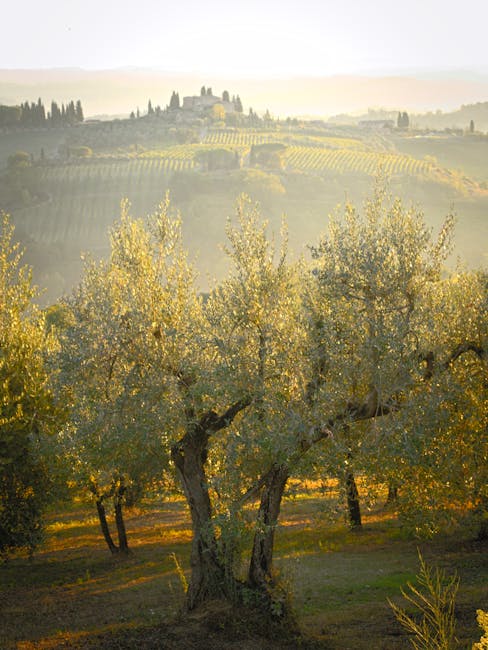
Remember that a great photograph depends not only on technique but on intention: look for gestures, details and quiet moments that reveal local life. A simple shot of a trattoria window with a carafe of Chianti, an old weathered door, a line of cypresses at dusk, or a misty vineyard are all images that together build an intimate album of your Tuscan encounters. Don’t hesitate to vary formats (landscape, portrait, square) and experiment with color and black-and-white to diversify moods.
Above all, bring curiosity and patience: some images appear in an instant, others require waiting for the right light or the right person to pass by. Respect the places, engage with locals when possible and let yourself be surprised. Tuscany rewards slowness and attentiveness. Revisit the same viewpoints at different times of day, explore side alleys and, most importantly, have fun finding the little detail that will make your series stand out. Safe travels and happy shooting — may your images capture the warmth, the stone and the simple, enduring spirit of these Tuscan villages.