





Introduction
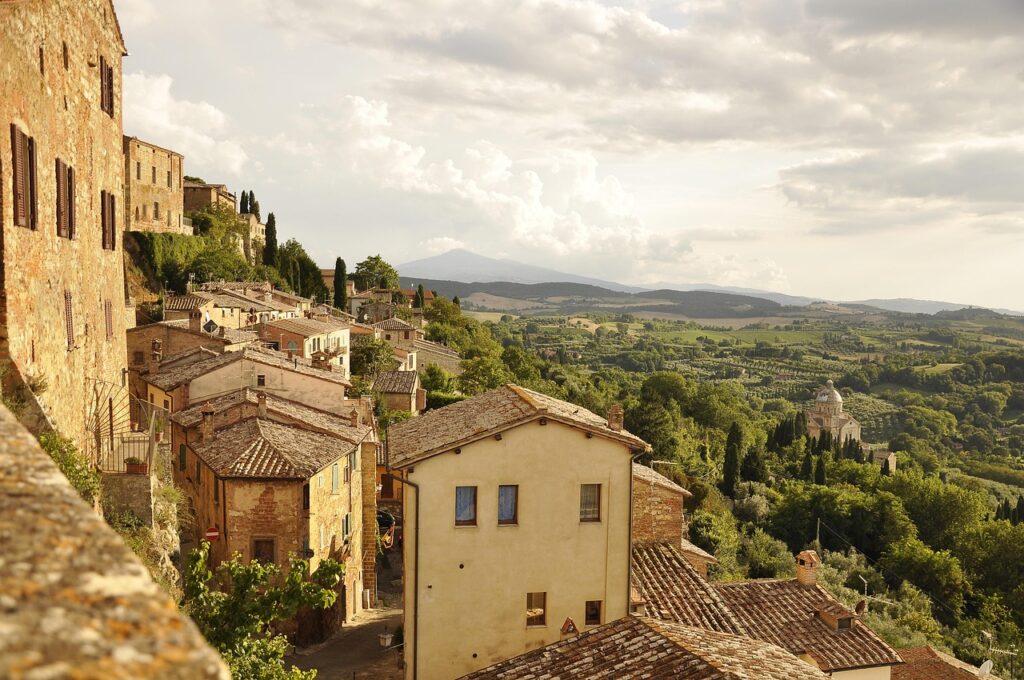
Tuscany is a land of golden hills, rows of cypress like a string of sentinels, vineyards that ripple with the seasons and, above all, hilltop villages that look frozen in time. Hiking through Tuscany’s hilltop villages means immersing yourself in scenery where every grove, stone wall and winding alley has a story to tell. This kind of route mixes the joy of walking — dirt tracks, mule paths and quiet secondary roads — with cultural and culinary discoveries in iconic places like San Gimignano, Volterra, Monteriggioni, Pienza and Montepulciano.
Walking between these villages is not just about reaching a destination: it’s about experiencing the changing views. Sunrise can turn San Gimignano’s medieval towers into golden silhouettes; the afternoon shade highlights Monteriggioni’s massive ramparts; Montepulciano’s terraces offer vistas that alone justify a long pause. Hiking gives you time to watch vines cling to the slopes, silver olive groves ripple in the wind and sunflower fields when in season. You walk slowly, stop often, taste local treats, ask questions of residents, visit a forgotten church or a craft shop.
This article is a complete, immersive guide to organizing a hike between Tuscany’s hilltop villages: a recommended itinerary, must-see monuments and addresses, practical information (hours, prices, safety tips), and local advice to make the most of your experience. The suggestions suit casual walkers as well as light-trekking enthusiasts: routes that can be adjusted to your fitness level and desired duration, with daily stages designed to balance walking, sightseeing and tasting.
Touring Tuscany on foot requires some planning: considerations for accommodation (agriturismos, relais, B&Bs), logistics (parking, public transport, baggage transfers) and seasons (hot dry summers, ideal spring and autumn, cool winters). But it’s well worth the effort: the daily rewards — an espresso on a medieval square, a plate of pecorino while gazing over the valley, the distant chime of a church bell — are priceless. This guide also gives concrete points of reference: exact addresses, indicative prices in euros and opening hours of major sites so you can prepare your hike with confidence.
Finally, hiking between the hilltop villages of Tuscany is a sensory experience. The scent of dry herbs and rosemary, the crunch of stone underfoot, the shifting light that sculpts the hills… Each stage invites you to slow down and see Tuscany differently — not as a string of monuments, but as a living place, worn by the centuries and animated by its people. Pack your boots, your map and your curiosity: Tuscany is waiting.
Recommended route: San Gimignano → Volterra → Monteriggioni (route, maps and stages)
For a first-time hike among Tuscany’s hilltop villages, I recommend a classic but flexible route linking the medieval highlights: San Gimignano → Volterra → Monteriggioni. This route can be completed in 3 to 6 days depending on your pace and desired daily distance (8 to 20 km/day). It combines secondary tracks, agricultural lanes and stretches on low-traffic roads. The profile is hilly: expect steady climbs and some technical, sometimes rocky descents.
Start: San Gimignano (Piazza del Duomo), the village’s medieval heart. Practical note: the bus station and the « Parking Collegiata » are right by the old town, but if you arrive by car it’s better to leave the vehicle in a peripheral car park around the walls. The first stage leads you out of the ramparts along hedgerow paths toward the nearby hills: crossing olive groves and crest-line trails offering views over the Val d’Elsa.
Stage: San Gimignano to Volterra — approximate distance: 18–22 km depending on variants. You’ll pass agricultural hamlets and sometimes join the provincial road SP9, but favor parallel footpaths when possible. Volterra reveals itself at the last moment, perched on its limestone promontory. Piazza dei Priori makes for an ideal arrival point.

In Volterra, take time to visit the Palazzo dei Priori (Piazza dei Priori, 1, 56048 Volterra PI). Exact address: Piazza dei Priori, 1, 56048 Volterra PI, Italy. Typical opening hours: 10:00–17:00 (seasonal, closed some winter days); indicative entrance fee: €4–6 to access the historic rooms. The town hall offers valley views and a deep dive into medieval civic architecture.

Day two: Volterra → Monteriggioni via small roads and vineyard paths — approximate distance: 20–25 km if you take the direct option. You can break the stage into two by passing through small villages like Saline di Volterra or detouring to Certaldo Alto (with bus options). Monteriggioni, crowned by its circular ramparts, is an excellent finishing point for the second stage.
In Monteriggioni, the main site to see is the fortified enclosure: Castello di Monteriggioni, Piazza Roma, 1, 53035 Monteriggioni SI. Exact address: Piazza Roma, 1, 53035 Monteriggioni SI, Italy. Hours: usually 10:00–19:00 (May–Sept), reduced times off-season; price: around €6–8 for accessing the walls or a guided visit. Walking along the ramparts at sunset is unforgettable.
Logistics: to shorten some stages or avoid busy road sections, use local bus lines (Tiemme) that connect the main villages. For example, there are regular shuttles between Siena, Monteriggioni and San Gimignano in high season. If a day looks too long, you can organize a baggage transfer with local services (book 24–48 hours in advance).
Must-see villages and detailed monuments (addresses, hours, prices, visits)
The richness of this hike is in the villages and monuments you encounter. Here are key places with addresses, hours and indicative prices — be mindful of seasonal variations (public holidays, winter schedules). This information will help you plan stops and make reservations if needed.
San Gimignano — Collegiata di Santa Maria Assunta
Full name: Collegiata di Santa Maria Assunta (Duomo di San Gimignano). Address: Piazza del Duomo, 1, 53037 San Gimignano SI, Italy. Opening hours (indicative): 10:00–17:30 (high season), often closed between 13:00–14:30 for services; check locally. Price: combined ticket « Duomo e Torre » around €9–12 (combined rate varies depending on access to Torre Grossa). The collegiate church is famous for its medieval frescoes inside that depict biblical cycles and scenes of religious life. Works by artists such as Domenico Ghirlandaio and other local schools create a sacred, colorful atmosphere.

Volterra — Roman Theatre and Museo Guarnacci
Volterra is rich on two fronts: Etruscan traces and medieval architecture. The Teatro Romano (via Vittorio Emanuele, 1) sits below the town and offers a panorama; self-guided visits are possible with a small ticket (around €3–5). The Museo Guarnacci (Piazza dei Priori, 11, 56048 Volterra PI) houses an impressive Etruscan collection. Museum address: Piazza dei Priori, 11, 56048 Volterra PI, Italy. Hours: 10:00–18:00 (high season; reduced in low season); price: around €6–9.

Pienza — Cattedrale dell’Assunta and Piazza Pio II
Pienza, redesigned in the 15th century under Pope Pius II, is a perfect example of Renaissance urban planning. The focal point is the Cattedrale dell’Assunta (Duomo di Pienza) on Piazza Pio II, 53026 Pienza SI, Italy. Hours: 9:00–17:30 (may vary); entrance: suggested donation €2–5. Next to it, the Palazzo Piccolomini (Piazza Pio II, 5) is open to the public: exact address Piazza Pio II, 5, 53026 Pienza SI, Italy, typical hours 10:00–17:00; price: €6–8. Pienza is also the land of pecorino di Pienza — don’t miss a tasting at a local affineur.

Montepulciano — Piazza Grande and Historic Cellars
Montepulciano is famous for its Vino Nobile. The heart is Piazza Grande with the Cattedrale di Santa Maria Assunta (Piazza Grande, 1, 53045 Montepulciano SI). Duomo address: Piazza Grande, 53045 Montepulciano SI, Italy. Hours: 9:30–18:30 (seasonal); price: free entry to the church, though some chapels may ask for a small fee (€2–4). Wine lovers will enjoy historic cellars like Cantina Contucci (via di Collazzi, 7) which offer tours and tastings (check address and conditions; tastings from €10–20 depending on the package).

When planning your stages, always check official sites or local tourist offices to confirm hours and fees, especially off-season. Note that in Italy many churches accept donations rather than selling tickets and municipal museums often offer reduced rates for students and seniors.
Food, local specialties and tasty stops
Tuscany stands for uncomplicated, delicious food: rustic bread, extra-virgin olive oil, sheep’s cheeses (pecorino), cured meats (salumi), handmade pasta and full-bodied wines. On a hike between hilltop villages, your culinary stops are as essential as the panoramic ones — they restore your energy and feed the sensory experience.
In Pienza, taste pecorino di Pienza: there are several ages — young, aged 3–6 months, and extra-aged 12–36 months. A tasting at a local affineur usually costs between €5 and €12 depending on selection and quantity. Look for shops on Via del Casello or near Piazza Pio II for artisanal products. Pair a piece of pecorino with a glass of Vin Santo or a Chianti Classico for a classic Tuscan treat.
In Montepulciano, make the most of historic cellars: many offer paid visits and tastings. Typical examples: tastings at Cantina Contucci or cellars near Piazza Grande, packages from €10 (three glasses) up to €30–40 for a full tour with food pairings. Book especially in high season as groups can be large.
For lunches on the trail, favor artisan panini from local shops or a picnic with products bought in the morning (saltless Tuscan bread, salami, cherry tomatoes, local olive oil). Weekly markets (for example San Gimignano’s market often on Saturday mornings) are perfect for sourcing fresh supplies.
Tuscany’s culinary rhythm follows the seasons: in spring, wild asparagus and blossoms; in summer, ripe fruit and tomatoes; in autumn, mushrooms, truffles and new vintages; in winter, heartier dishes like ribollita and pappardelle with wild herb ragù. Family-run trattorias often open for lunch and dinner — look for « osteria » signs offering local menus at reasonable prices (main courses average €10–18).

Local practical tips: logistics, safety, gear and seasons
For a successful hike among Tuscany’s hilltop villages, solid logistical preparation is essential. Here are practical tips from local experience covering gear, transport, accommodation and safety.
Gear: choose light, well-maintained hiking shoes with good grip; Tuscan trails alternate packed earth, grass and ancient cobbles that get slippery when wet. Pack a small backpack (20–30 L) for water (minimum 1.5–2 L per person in summer), a windproof jacket, sunscreen, hat, a basic first-aid kit and a power bank. Trekking poles can be helpful on cobbled descents.
Transport: villages are reachable by car but historic centers are often ZTL (limited traffic zones). If you rent a car, park in official lots at village entrances (e.g. Parking Collegiata in San Gimignano). Bus connections are run by Tiemme (Siena/Val d’Elsa region); check timetables online (Tiemme official site) for return planning. Some sections between villages are doable with train + bus combinations (e.g. connections via Poggibonsi for San Gimignano).
Accommodation: for authenticity, favor agriturismo (farm stays) or B&Bs in the countryside between villages — they often include dinner and breakfast with local products. If you prefer town comfort, book early in high season. Price examples: rustic agriturismo €60–100/night for a double, village B&B €80–150/night, boutique hotels €120–250/night.

Seasons: spring (April–June) and autumn (September–October) are the best times to hike: pleasant temperatures, beautiful natural colors and fewer crowds. July–August can be very hot and busy — plan early starts and shady breaks. In winter, villages keep their charm but some attractions and services reduce their hours.
Safety and local respect: keep places clean — don’t leave any trash; respect private property (signs: « proprieta privata »); adapt your pace on narrow passages and cross roads carefully. Let someone know your daily route if you walk alone; mobile coverage is generally good in valleys but can be spotty on some ridge lines.
Additional activities and local experiences (workshops, guided tours, markets)
Beyond walking and architectural visits, Tuscany offers complementary activities that will enrich your hike: herbalist workshops, cooking classes, tastings at producers, olive-mill visits and local markets. These experiences create a direct connection with the land and living culture of the region.
Cooking classes: many farmhouses and local schools offer 3–6 hour workshops teaching fresh pasta, rustic sauces and regional desserts. Indicative prices: €60–120 per person depending on duration and whether a meal is included.
Olive oil workshops: a visit to a frantoio (olive mill) with an explanation of pressing methods and a tasting. Typical address: « Frantoio Sociale » near San Gimignano or Pienza (addresses vary); duration 1–2 hours; cost €8–20 per person including tasting.
Markets and producers: weekly markets are an excellent way to buy fresh produce and chat with locals. Examples: San Gimignano market (day varies, often Saturday morning), Pienza market (small daily market in high season), farmers’ markets around Montepulciano. Producers sell olive oil (€2.50–20/liter depending on quality), wines (local bottles €8–30), organic vegetables and cheeses.
Guided visits: to deepen your understanding of medieval and Etruscan history, opt for local guides accredited by tourist offices. A 2-hour group tour costs about €60–120 (guide fee, split among participants). Guides provide keys to reading architecture, ancient hydraulics and local traditions.
Finally, don’t forget to include “free” days with no tight agenda: wander a back street, sit under a loggia, read with a valley view. These unplanned moments are often the most memorable.
Conclusion
Hiking through Tuscany’s hilltop villages is a complete adventure: it combines moderate physical effort, deep cultural discoveries and culinary pleasures. Walking San Gimignano, Volterra, Monteriggioni, Pienza and Montepulciano takes you through centuries of history while letting you taste contemporary rural Tuscan life. The trails provide ever-changing panoramas at every turn, and the villages reward walkers with symbol-rich monuments, sunlit squares and generous tables.
This guide has given you not only a recommended route and immersive descriptions, but also practical details: exact addresses (Collegiata di Santa Maria Assunta, Piazza del Duomo 1, San Gimignano; Palazzo dei Priori, Piazza dei Priori 1, Volterra; Cattedrale dell’Assunta, Piazza Pio II, Pienza; Piazza Grande, Montepulciano; Castello di Monteriggioni, Piazza Roma 1), usual opening hours and indicative prices to help plan your visits. These landmarks make logistics easier (reservations, opening times) while leaving you the freedom to tailor the hike to your rhythm.
Final tips: pick mild seasons for walking, book accommodation and tastings in high season, gear up properly and allow for transfers if a stage becomes too long. Bring curiosity, respect and patience — they are your best guide and companion. And leave time for the unexpected — an open door to an inner courtyard, an invitation from a producer to taste a cheese, a sunset from a tower — those unscripted moments are the very heart of Tuscany.
Happy hiking and safe travels: may every step between Tuscany’s hilltop villages be a discovery, and every stop a lasting memory.