




Introduction
Siena, perched on its gentle hills in the heart of Tuscany, is an essential stop for anyone passionate about Gothic architecture. Smaller than Florence but incredibly rich in medieval heritage, Siena has managed to preserve an urban ensemble where stone, marble and vaulted ceilings tell a story of faith, civic rivalry and artistic refinement. Here, Gothic is not just a style to admire in isolation; it’s woven into the fabric of the city — from the polychrome façade of the Duomo to the elegant arches of public palaces, and the quiet cloisters and cobbled streets that rise and fall like ramps through an open-air museum.
For travelers drawn to sharp lines, colorful stained glass, pointed arches and medieval structural solutions, Siena offers an exceptional concentration of well-preserved Gothic architecture. The Duomo di Siena (Cathedral of Siena) is often the starting point: a masterpiece of Italian Gothic whose carved façade, marble floors and the Biblioteca Piccolomini inside provide a complete panorama of the city’s artistic and spiritual ambitions in the 13th and 14th centuries. A short walk away, the Piazza del Campo and the Palazzo Pubblico with the Torre del Mangia illustrate civic Gothic — architecture designed to assert the power and identity of an Italian city-state.
This article aims to guide you through Siena’s Gothic core: detailed visits to the main monuments, precise addresses, practical opening hours and ticket advice, photography tips and the best times to visit, plus logistical pointers to enjoy every detail without being overwhelmed by crowds or practical constraints. Each place is described immersively so you can almost hear footsteps echoing under the arcades, feel the coolness of crypts, and spot the small sculptures tucked into chapel corners.
Whether you’re an architect, an art history student, a photographer or simply a devoted fan, Siena is an open-air school of Gothic architecture. The contrast between dark stone and white marble, the prevalence of pointed arches, the verticality of interiors and the decorative richness of tomb surfaces and altarpieces create an intense emotional and intellectual experience. The city invites slow reading: push open a door, sit in a chapel, look up to a triforium, compare one capital with another. In the sections that follow, we’ll detail the must-see sites with all the practical information you need to plan your Gothic immersion in Siena.

The Duomo di Siena (Cattedrale di Santa Maria Assunta): religious Gothic at its finest
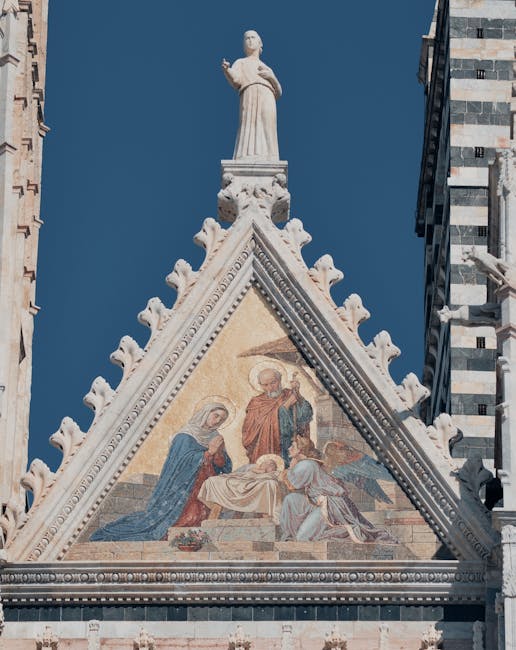
The Duomo di Siena — officially the Cattedrale Metropolitana di Santa Maria Assunta — is the quintessence of Sienese Gothic. Address: Piazza del Duomo, 8, 53100 Siena SI, Italia. Its polychrome façade, the work of artists such as Giovanni Pisano, alternates white and dark green marble to dramatic effect. Inside, the pavement is a sculpted encyclopedia: more than 50 inlaid marble panels (intarsi) depict biblical and allegorical scenes created by masters like Domenico Beccafumi, il Vecchietta and others between the 14th and 16th centuries.
Practical info: Typical opening hours — Duomo and the Cathedral Complex are often open from 10:00 to 19:00 (last entry about 30–45 minutes before closing); closures can occur for religious services (check the official site before your visit). Approximate price — Cathedral Complex ticket: around €15–18 (reduced €12–14 for youth/students depending on season; sometimes free entry for certain ages or EU residents under conditions). The combined ticket typically includes the Cathedral, the Crypt, the Biblioteca Piccolomini, the Museo dell’Opera Metropolitana and sometimes access to the terrace view.

The Biblioteca Piccolomini deserves a separate visit: founded in the 15th century, it houses stuccoes, finely colored frescoes and illuminated manuscripts, some of which still retain their original decorated bindings. The lighting in the library creates an intimate atmosphere; step closer to the bindings and miniatures to appreciate the craftsmen’s finesse. Don’t miss the Duomo’s Crypt, recently made accessible, which offers a unique perspective on the Gothic foundations and sculpted podiums.
Practical tips:
- Book online when possible — it saves long queues, especially from May to October.
- Dress code: respect the rules for places of worship (shoulders and knees covered to enter the cathedral).
- Best time: early morning (at opening) or late afternoon for the low light that flatters the façade.
- Photography: most interior areas allow photos without flash; use a wide-angle lens for the pavement and vaults.
Palazzo Pubblico and Torre del Mangia: civic Gothic and city views
Piazza del Campo is Siena’s civic heart, dominated by the Palazzo Pubblico (Palazzo Pubblico di Siena) and its tall Torre del Mangia. Address for Palazzo Pubblico and Museo Civico: Piazza del Campo, 1, 53100 Siena SI, Italia. Begun in the late 13th century, the building is a typical example of Italian civic Gothic, where verticality, crenellations and the use of brick and stone define the city’s skyline. Inside, the Museo Civico preserves iconic frescoes like Simone Martini’s Maestà and Ambrogio Lorenzetti’s famous Allegory and Effects of Good and Bad Government — essential works for understanding how Gothic art also served as a civic manifesto.
Hours and tickets — Museo Civico (Palazzo Pubblico): generally open 10:00–19:00; approximate ticket €8–12 (reduced for students/children). Torre del Mangia: entrance and ticket office address the same (Piazza del Campo, 1). Climbing the Torre del Mangia costs about €9–12 (prices vary by season) and is a free but strenuous climb: 400+ narrow spiral steps. Tower access hours are often slightly more limited, typically 10:00–18:30 in high season.
Why climb? From the Torre del Mangia’s summit platform — built between 1338 and 1348 — the view over Siena’s red roofs, the Tuscan hills and the Duomo’s silhouette is unforgettable. The tower was designed not only as a civic landmark but as a symbol of republican power. At the entrance, take time to examine the carved details in the ceremony hall and the rich interior ornamentation of the Palazzo.
Practical tips:
- Accessibility: the tower is not accessible to people with reduced mobility; if needed, plan alternative viewpoints around the Piazza.
- Safety: during busy periods, access may be managed in time slots; arrive early to avoid waits.
- Photography: a standard lens and a small zoom work well; morning or late-afternoon light enhances the brick and emphasizes the textures of the square.
- Activities: if you visit in July/August, check Palio-related events — even off race dates, the Palazzo’s archives and decorations recount this tradition.
Complesso Museale Santa Maria della Scala and hospital Gothic
Facing the Duomo, the Complesso Museale Santa Maria della Scala (the former medieval hospital) is a lesser-known but essential site for understanding the social use of Gothic architecture. Address: Piazza del Duomo, 2, 53100 Siena SI, Italia. Founded as early as the 9th century and rebuilt over the centuries, Santa Maria della Scala became one of the first modern hospitals in Europe, with architecture that combines vaulted halls, cloisters and decorated chapels. The interior façades, loggias and exhibition rooms reflect a Gothic aesthetic adapted to practical uses: dimmed light, vaults that regulate airflow and decoration meant to comfort both soul and body.
Hours and tickets — Typical hours: 9:00–19:00 (seasonal variations); ticket price: about €10–12 for entry to the complex and permanent exhibitions; reductions for students and groups. The museum houses archaeological collections, religious frescoes (including works by Domenico di Bartolo and Matteo di Giovanni), temporary exhibitions and immersive routes that explain the history of medieval medicine and civic charity.
Why visit? The contrast between Santa Maria della Scala’s social function and the splendor of its Gothic decoration shows how the style was used for social missions. The large vaulted halls (Sala del Pellegrinaio, Sala del Refettorio) and corridors leading down to former dormitories create a poignant atmosphere: here the stone keeps traces of countless lives and prayers.
Practical tips:
- Time needed: allow 1.5–2 hours for the main route, more if you want to see temporary exhibitions.
- Multimedia: the site often offers audio guides and information panels in English; helpful for understanding the specific functions of the rooms.
- Combination tickets: consider a combined Duomo + Santa Maria della Scala ticket to save money if you plan to visit both sites the same day.
Basilica di San Domenico: Gothic devotion and the relic chapel
The Basilica di San Domenico is a stark and powerful example of Sienese religious Gothic in a more severe and solemn form. Address: Piazza San Domenico, 53100 Siena SI, Italia. Built between the late 13th and 15th centuries, the church features wide Gothic naves, large pillars and decorated side chapels, including the Cappella di San Caterina (St. Catherine of Siena), which houses relics of the patron saint and artworks related to her life. The interior atmosphere is more austere than the Duomo’s, but the solemnity of the space reinforces the impact of Gothic elements: large vertical surfaces, pointed arches, high vaults and shadows that favor contemplation.

Hours and tickets — Typical hours: 7:30–12:00 and 16:00–19:00 (church hours may vary with the liturgical calendar). Entry to the basilica is often free, but access to certain chapels or relics may require a small donation or symbolic ticket (about €2–5). Check service times and celebrations to avoid periods when the church is closed to the public.
Points of interest:
- Cappella di San Caterina: a pilgrimage site where you can see relics and illustrated panels about Saint Catherine’s life.
- Frescoes and altarpieces: several local artists left their mark here; pay attention to the details in tabernacles and Gothic woodwork.
- Stations of the Cross: the liturgical route is often highlighted by wooden and stone sculptures.
Practical tips:
- Respect: the basilica is an active place of worship; behave quietly and avoid noise.
- Guided tours: thematic tours about Saint Catherine and religious Gothic are offered by local guides — useful to contextualize the relics and frescoes.
- Photography: light is often low; use a fast lens and a higher ISO (no flash) to preserve the atmosphere.
Pinacoteca Nazionale and private Gothic palaces — aristocratic interiors
Beyond public and religious monuments, Siena hosts many private palaces where the urban elite adapted Gothic to domestic scales. The Pinacoteca Nazionale (National Gallery of Siena) is an excellent starting point for understanding Sienese Gothic painting and how it integrates with interior decoration. Address: Via San Pietro, 33, 53100 Siena SI, Italia. The Pinacoteca preserves painted panels, altarpieces and artworks that complement the architectural reading: local artists painted for chapels and noble houses, and these works inform the relationship between built space and pictorial decor.

Hours and tickets — Typical hours: 10:00–18:00 (sometimes closed Mondays); approximate price: €6–10 (reductions for students and seniors). Outside the Pinacoteca, stroll streets like Via di Città, Via dei Pellegrini and the small medieval squares to spot private Gothic palaces, inner courtyards and richly carved portals.
Why it matters? Private palaces show a domesticated version of Gothic: trilobed portals, mullioned windows, loggias, monumental staircases and room decor that mixes frescoes and painted panels. The stone details around doorways, iron knockers and carved lintels reveal family status and political alliances.
Practical tips:
- Themed walks: create your own Gothic route by linking the Pinacoteca with historic streets; note how arcades and cornices are used to compare periods.
- Private visits: inquire about guided visits to private palaces (sometimes organized by local associations) to access interiors otherwise closed to the public.
- Shopping: local artisans (stone restorers, bookbinders) sell reproductions of Gothic elements — an original souvenir rather than a run-of-the-mill fridge magnet.
Conclusion
Siena is a concentrated lesson in Italian Gothic that can be read both in grand public architecture and in domestic details. Visiting Siena for its Gothic means adopting a contemplative pace: wander, look up, stop at a portal and listen to the story told by weathered sculptures and vaults. From the Duomo di Siena to the silent halls of Santa Maria della Scala, through the Torre del Mangia and private palaces, each space offers a different lesson in Gothic use — religious, civic, hospital-related or residential.
Practically, come prepared: book online when possible, wear respectful clothing for churches, allow time to climb the Torre del Mangia if you want the panorama, and leave some margin to visit lesser-known museums where unexpected treasures sometimes hide. The combined ticket Duomo + Santa Maria della Scala + Museo Civico often proves economical and helps you organize your day without queuing at every site.
Finally, let the city lead you: the best experiences happen off the most immediate routes, by pausing in a small neighborhood church, watching a Gothic window at dusk, or talking with a local craftsman who will explain the technique of a cornice or the hue of a marble. Siena is a layered lesson in Gothic architecture, ready to reveal itself slowly to those who know how to look. Whether your trip is a focused weekend or a longer stay, the city will offer fresh discoveries in every lane and every cloister, and you’ll leave with a deeper understanding of medieval Italy — clear-eyed and devastatingly beautiful.