





Introduction: Siena and the magic of the Piazza del Campo
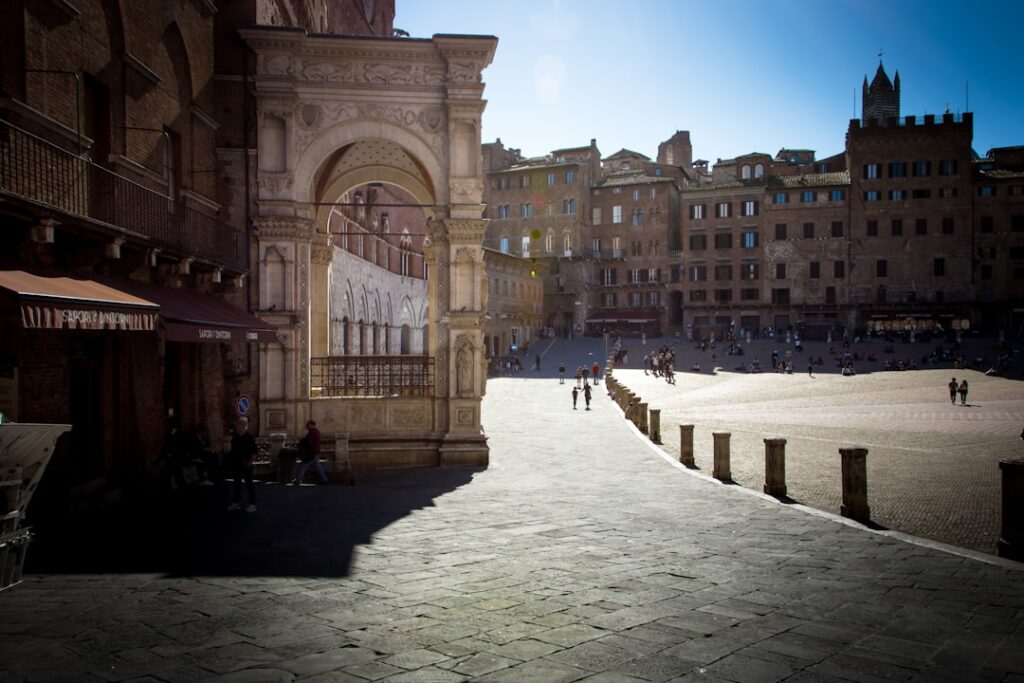
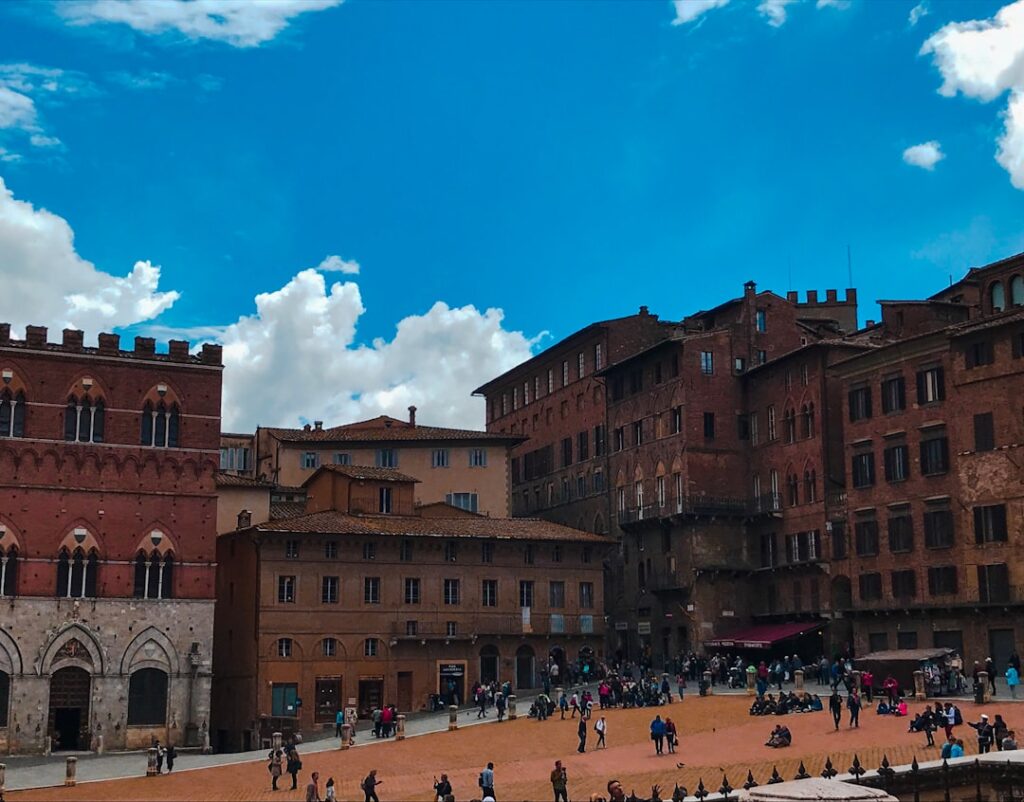
Siena, the medieval heart of Tuscany, is a city best discovered with both your eyes and a little time to spare. At the center of this urban tableau sits the Piazza del Campo, one of Italy’s most iconic squares — famed for its shell-like shape, fan-patterned brick paving, and an atmosphere that feels like history underfoot. Seeing the Piazza del Campo in person puts you in the middle of a living scene: cafes, markets, hurried locals, street musicians, and above all the collective memory of a city that has kept its urban fabric intact since the 13th century.
The Piazza del Campo isn’t just a tourist hotspot; it’s Siena’s civic core, the meeting place of the contrade (the historic districts), the stage for the Palio — the famous biannual horse race — and a key to understanding the city’s political and social identity. Its distinct topography — a vast concave shell divided into nine sections in tribute to the nine magistrates who governed the Sienese Republic — gives the square an acoustic quality, sightlines, and a grandeur you really only appreciate when you stand in the middle rather than when you see a photo.
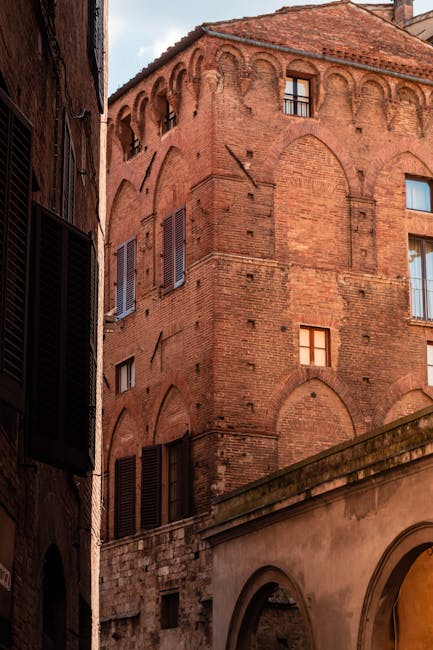
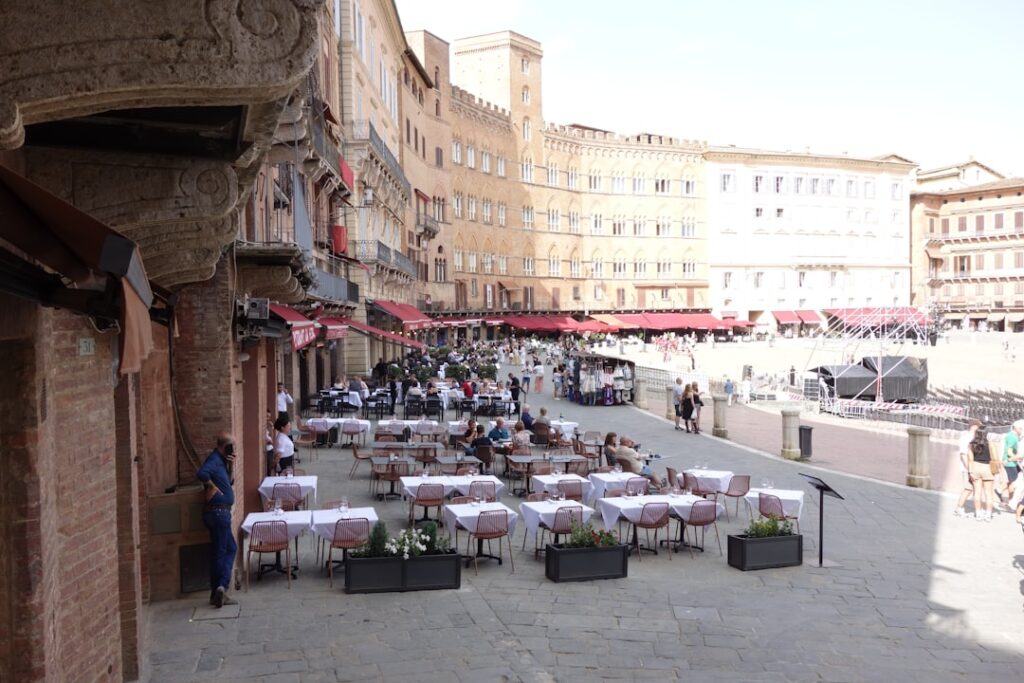
Visiting here also invites you to slow down. The terraces of the cafes that ring the Piazza del Campo, like the well-known Caffè Gilli (traditionally not far from the Campo in the historic center), are perfect for people-watching: students studying, travelers whispering over guidebooks. In the evening, the low light highlights the crenellations of the buildings, shadows sketch patterns on the paving, and the square takes on an intimate mood. Approach your visit with curiosity: notice architectural details, memorial plaques, small artisan shops, and facades that tell the long story of the city.
Take time to go into the Palazzo Pubblico and climb the Torre del Mangia, linger at the loggias, or simply sit on the steps and watch the square change over the hours — these are experiences that make seeing the Piazza del Campo in person worth far more than a thousand pictures. In this article I’ll give you a practical, immersive guide to the must-sees, exact addresses, approximate prices in euros, typical opening hours, and local tips to help you make the most of your time in the heart of Siena.
The essentials of the Piazza del Campo: architecture, atmosphere and history
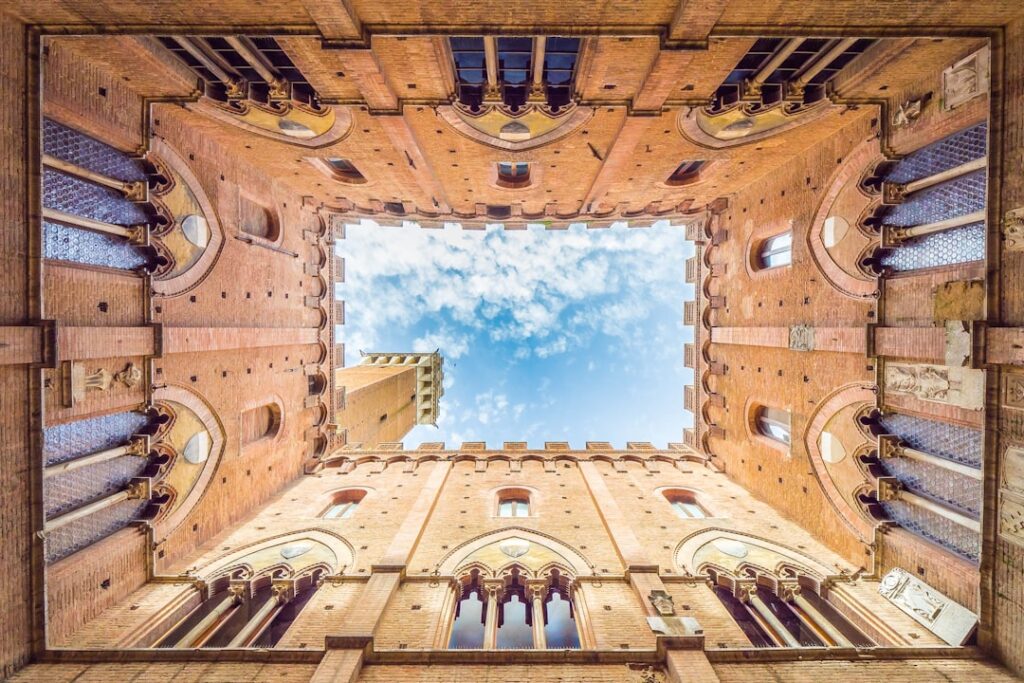
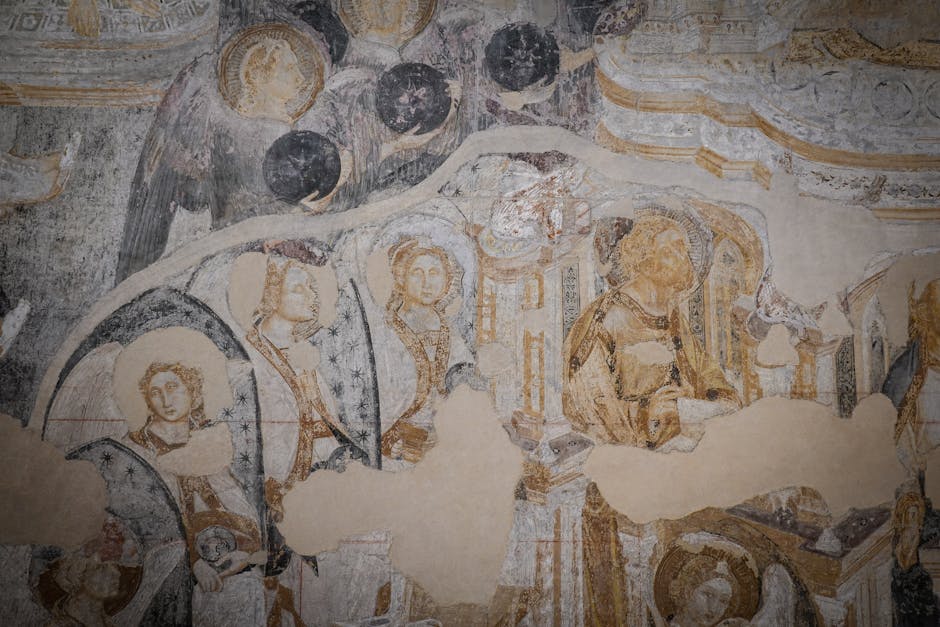
The Piazza del Campo is instantly recognizable by its shell shape and brick paving arranged in nine radiating sections. Everything in the center is designed to draw your eye toward the Palazzo Pubblico and the Torre del Mangia, which dominate the square. The Palazzo Pubblico is the old town hall, with large Gothic windows and imposing battlements; its official address is Piazza del Campo, 1, 53100 Siena SI, Italy. Inside you’ll find the Museo Civico, home to remarkable frescoes, notably Ambrogio Lorenzetti’s famous « Effects of Good and Bad Government » and works by Simone Martini. These frescoes provide a direct window into medieval Sienese political and moral thought.
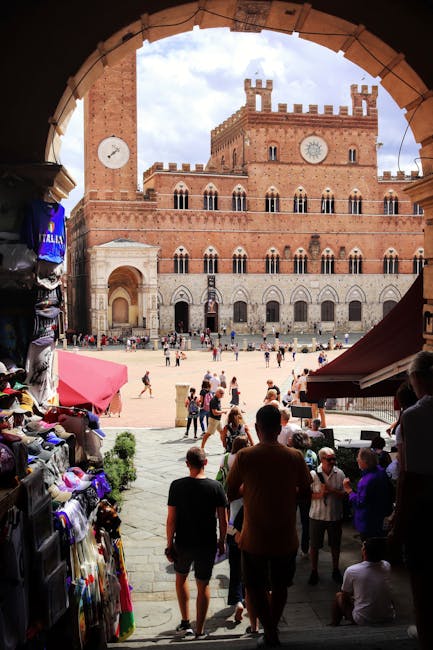
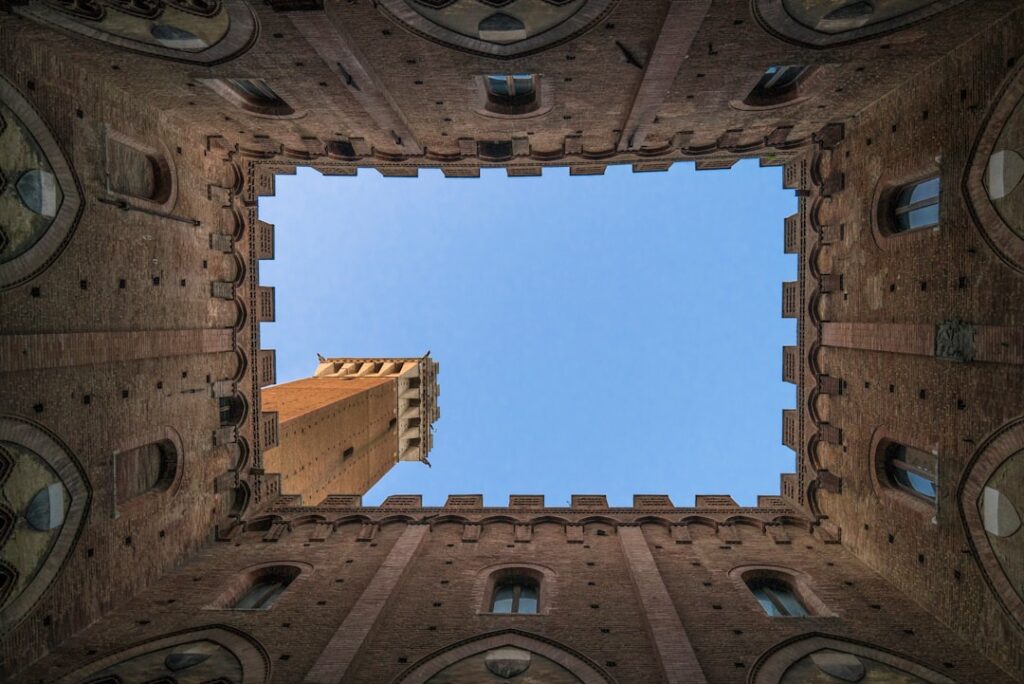
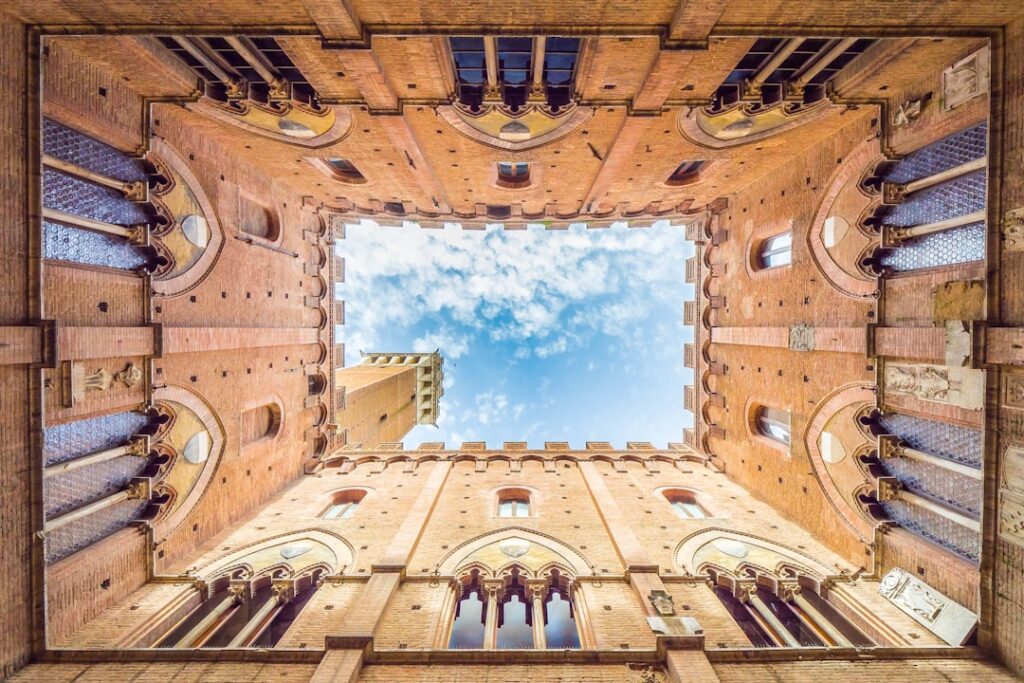
The Torre del Mangia, attached to the Palazzo Pubblico, rises to about 102 meters and offers spectacular views of the city and the Tuscan countryside. The climb is via a narrow internal staircase; the effort is rewarded with panoramic vistas that capture terracotta roofs and rolling hills. Another architectural detail visible from the square is the Fonte Gaia, a monumental fountain at the lower end of the Piazza del Campo. The fountain you see today is an 1868 replica; the 15th-century original is preserved in the Museo dell’Opera del Duomo to protect it from the elements.
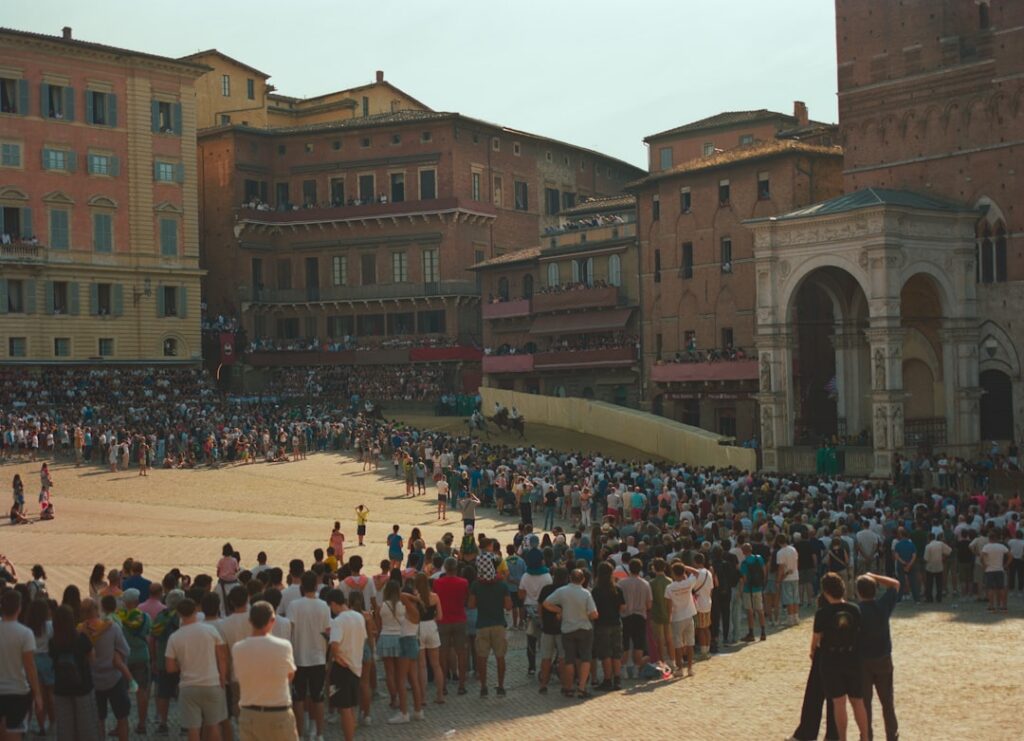
The atmosphere shifts through the day: in the morning vendors set up stalls in the side streets, mid-day brings tourists and school groups, and at dusk the square calms and becomes an open living room where locals gather to chat. The soundscape is typical: a mix of local Italian, other European languages, and the clatter of hooves during the Palio. Knowing these rhythms helps you pick the best time to visit: early morning for clear photographs, late afternoon into evening for atmosphere and warm light.
Monuments around the square and their full addresses
The Piazza del Campo is surrounded by must-see monuments that are all within walking distance and enrich your understanding of Siena. Here are the main sites, their addresses and an immersive description of each.
-
Palazzo Pubblico / Museo Civico
Address: Piazza del Campo, 1, 53100 Siena SI, Italy.
Description: A 13th-century Gothic building, the Palazzo houses the Museo Civico where you’ll find masterpieces of Sienese painting: frescoes by Ambrogio Lorenzetti and Simone Martini, among others. The Council rooms still retain the austere feel of medieval assemblies. -
Torre del Mangia
Address: Piazza del Campo, 1, 53100 Siena SI, Italy (access via the Palazzo Pubblico).
Description: Built between 1338 and 1348, the tower dominates the Piazza. Climbing roughly 400 steps brings you to a 360° panorama of Siena and the Tuscan hills. Photos from the terrace are especially dramatic at sunrise and sunset. -
Fonte Gaia
Address: Piazza del Campo, 53100 Siena SI, Italy (integrated into the square).
Description: A fountain originally decorated by Jacopo della Quercia in the early 15th century; the version you see is a restoration. It marks the lower end of the Piazza and historically served as a water supply point. -
Duomo di Siena (Cattedrale di Santa Maria Assunta)
Address: Piazza del Duomo, 8, 53100 Siena SI, Italy (about a 5–10 minute walk from the Campo).
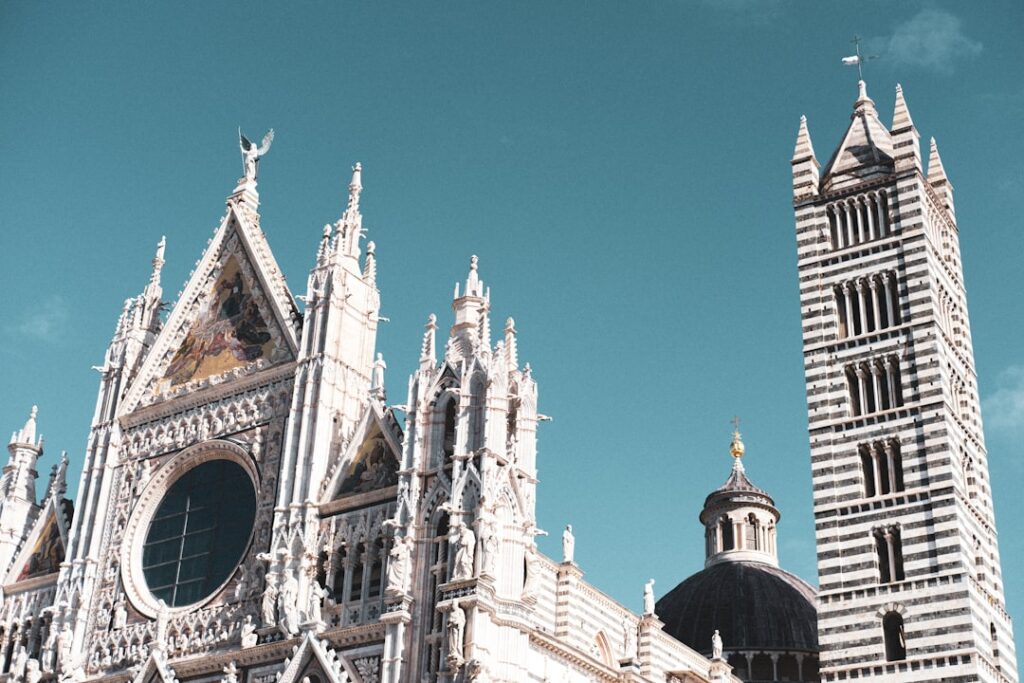
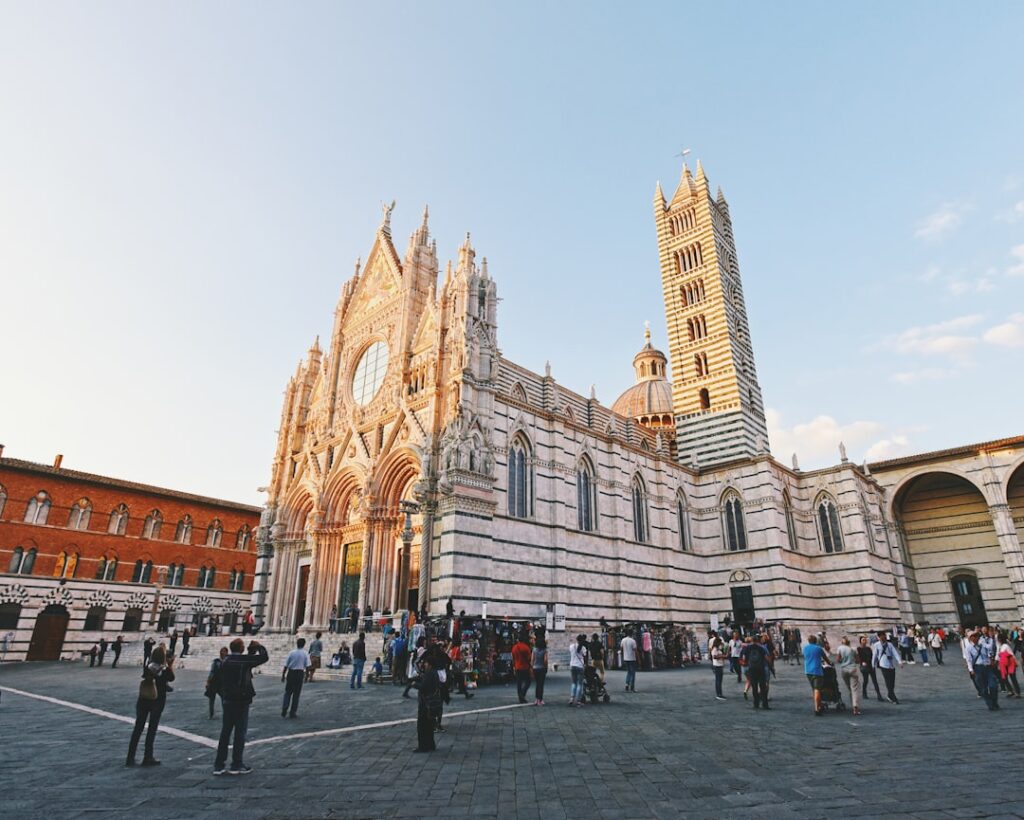
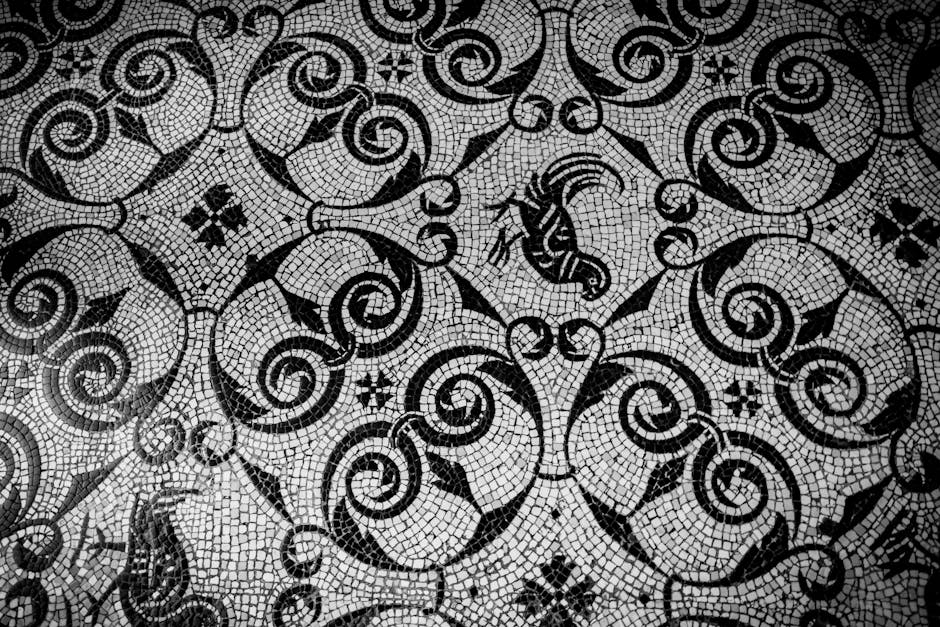
Description: A masterpiece of Italian Romanesque-Gothic architecture with a façade of white and green marble. Inside are works by Donatello and Pisano and exceptionally rich mosaic pavements (floor visits are often by reservation during high season). -
Santa Maria della Scala
Address: Largo Fanfulla da Lodi, 1, 53100 Siena SI, Italy (facing the Duomo, near the Campo).
Description: A former medieval hospital converted into a museum, with hospital rooms, frescoes and exhibitions on Siena’s social history. The architecture and cloisters provide a peaceful pause after the bustle of the Campo.
Visiting the Piazza del Campo: hours, prices and practical ticketing
Access to the Piazza del Campo itself is free — it’s a public square open 24/7. However, the monuments around it have opening hours, prices and admission rules you’ll want to know to plan a comfortable, complete visit.
Palazzo Pubblico / Museo Civico: address Piazza del Campo, 1, 53100 Siena SI.
Typical hours: generally 10:00 – 19:00 (last entry around 18:00). Closed on some public holidays (check the official site).
Approximate prices: museum entry around €10–€12 per person. Reduced rates for students and seniors (often €6–€8). Special temporary exhibitions can raise the price. Combined Palazzo + Torre tickets are sometimes available.
Torre del Mangia: access via the Palazzo Pubblico.
Typical hours: 10:00 – 19:00 (varies by season; extended hours in summer).
Approximate prices: the climb costs roughly €8–€10 (reduced fares may apply). Capacity is limited: in high season it’s recommended to book a time slot to avoid lines and to respect the access limits due to the narrow staircase.
Duomo di Siena (Piazza del Duomo, 8):
Typical hours: the Duomo complex is usually open 10:00 – 19:00 (hours vary for religious services).
Approximate prices: combined ticket « Museo dell’Opera, Duomo, Battistero, Cripta » around €10–€15. Visiting the Duomo’s floor mosaics sometimes requires a reservation and an additional fee. Religious services are free for worshippers; dress respectfully (shoulders and knees covered).
Ticketing tip: buy Palazzo Pubblico/Torre tickets online, especially in July–August and around Palio dates (July 2 and August 16). Ticket offices accept card and cash but queues can be long. Check for temporary exhibitions that may change the visitor route. City-museum passes can be worth it if you plan several visits in one day.
Local practical tips for an immersive, successful visit
Preparing for a successful visit to the Piazza del Campo means making a few practical choices and adopting some local habits. Here’s a detailed list of tips, tricks and concrete recommendations.
- Transport and arrival: Siena is reachable by train (Siena station, Via Mazzini / Piazza della Stazione, 53100 Siena SI) and by bus from Florence, Arezzo and other Tuscan towns. From the station, the Piazza del Campo is about a 15–20 minute uphill walk. The historic center is almost entirely pedestrian: plan to walk. The closest car parks are Parcheggio il Campo (Via Pian dei Mantellini) and the Santa Caterina car park — from there walk or take a shuttle if needed.
- Best times to visit: early morning (8:00–10:00) for crowd-free photos; late afternoon for atmosphere and warm light. Avoid midday in high season if you dislike crowds.
- Clothing and comfort: wear comfortable shoes — uneven cobbles and many steps (especially for Torre del Mangia and the Duomo). In summer bring a water bottle and a hat; in winter a windproof jacket is useful as the open square can be breezy.
- Where to eat: the terraces around the Campo offer tourist menus; for a more local experience wander the side streets like Via di Città or Via Banchi di Sopra where trattorie serve Sienese specialties (pici with ragù, ribollita). Price guide: coffee in the square €2–€5 (depending on what you order), lunch in a trattoria €12–€25 per person.
- The Palio: if you’re visiting around Palio dates (July 2 and August 16), expect an electric atmosphere, road closures, large crowds and price surges. Book accommodation and tickets well in advance. Watching the race from the Piazza del Campo requires a grandstand ticket (prices vary widely, often several hundred euros for the best seats); there are also « in campo » and free areas but strict controls and early closures are put in place well before the race.
- Respect and safety: the Piazza del Campo is generally safe but, like any tourist spot, watch your belongings. Respect signage (e.g., dining zones, rules against sitting on certain monuments when indicated).
Conclusion: why seeing the Piazza del Campo in person changes how you see Tuscany
Seeing the Piazza del Campo in person is more than ticking off a sightseeing list: it’s diving into political and social history, appreciating a preserved urbanity, and experiencing a public stage that embodies Siena’s uniqueness. The square, framed by the Palazzo Pubblico, the Torre del Mangia and the Fonte Gaia, condenses Gothic architecture, civic symbolism and living rituals (like the Palio) that make every visit singular. The vistas from the tower, the frescoes in the Museo Civico, the Duomo’s dense heritage and the nearby artisan lanes make for a complete itinerary where each moment brings a new discovery.
Take time to enter a museum, sit on a terrace and watch life go by, climb the tower at sunset, savor pici in a family-run trattoria or simply wander the narrow streets — that’s what turns a visit into a lasting memory. Keep in mind the practical tips: book certain tickets in advance, avoid peak hours if you seek tranquility, wear suitable shoes, and check opening hours and prices ahead of time — the figures given here (Museo Civico €10–12, Torre €8–10, Duomo combined ticket €10–15) are typical indicators but may change; check official sites before you travel.
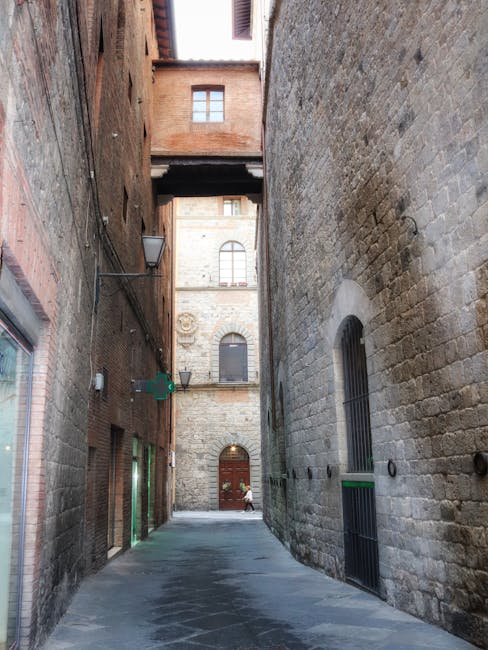
Finally, the Piazza del Campo is an invitation to pay attention. It’s a place that rewards slowness: sit down, observe, listen. The sensory experience — the smell of coffee, the crunch of cobbles underfoot, locals’ conversations, evening bells — will give you a less stereotyped, more intimate picture of Tuscany. Whether you’re a photographer, an art lover, a foodie or a curious stroller, Siena and its Piazza del Campo offer a range of emotions and stories that will linger long after you’ve left.