





Introduction — Dive into Tuscany’s Mosaics and Sacred Art
Tuscany is often celebrated for its rolling hills, wine and medieval towns, but it also hides a less-publicized treasure of sacred art: mosaics, frescoes, altarpieces and carved capitals that tell centuries of faith and history. From the colorful marble pavement of the Florence Duomo to the golden mosaics on the façade of the Basilica di San Frediano in Lucca, every stone reveals layers of history, iconography and artistic techniques blending Byzantine, Romanesque and Gothic influences. For the curious traveler, exploring these works is more than a cultural outing: it’s a sensory immersion in the shimmer of tesserae, the gleam of gold leaf and the narrative depth of sacred scenes.
As you travel across Tuscan towns you’ll find major sites where sacred art has been preserved, restored and displayed for the public. Florence, the epicenter of the Renaissance, offers the Battistero di San Giovanni and the Museo dell’Opera del Duomo, home to invaluable mosaics and sculptures. In Pisa, the Camposanto Monumentale reveals intense pictorial cycles and funerary decorations. In Lucca, the golden mosaic on the façade of the Basilica di San Frediano is a visual emblem. And in Siena, the Duomo di Siena and the Libreria Piccolomini present rich marbles, paintings and liturgical ornamentation.
This guide walks you step by step through these sites: full addresses, opening hours, prices in euros, immersive descriptions and practical tips to make the most of your visit (best times to go, photo rules, recommended dress, combined tickets). Whether you want to admire the finesse of Byzantine tesserae in a baptistery or interpret the symbolism of an altarpiece in a medieval basilica, you’ll have everything you need to turn your time in Tuscany into a memorable cultural route. Get ready to feel history under your feet, watch light reflect off gold and hear, beneath the vaults, the echo of centuries of devotion.

Florence: Duomo, Baptistery and Museo dell’Opera — The Heart of Mosaics and Sacred Heritage
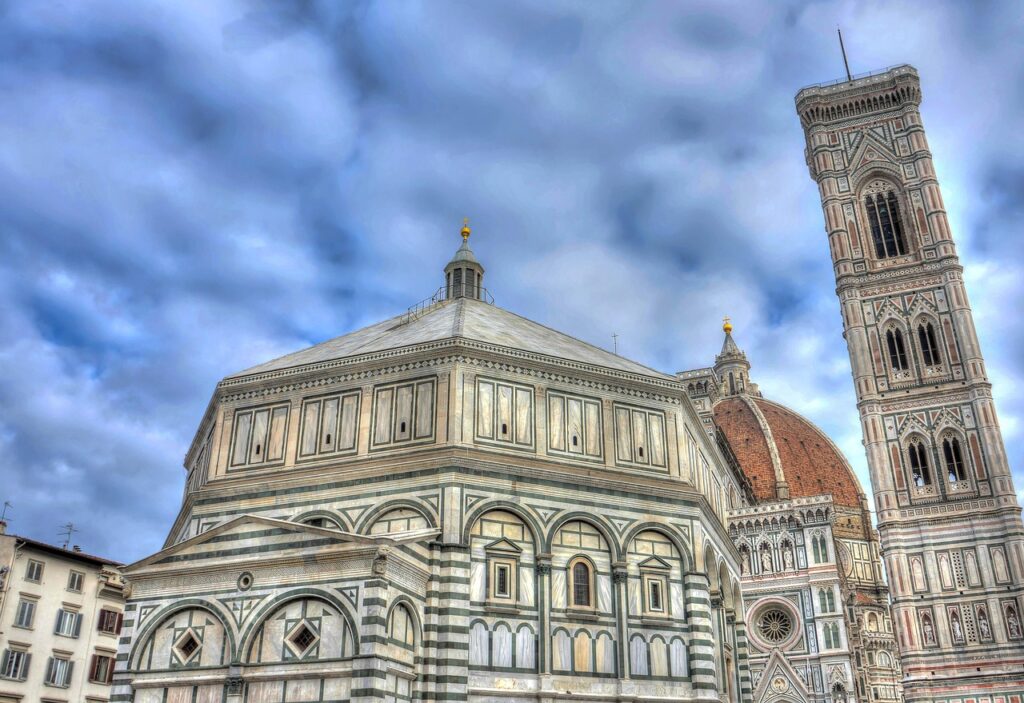
Florence concentrates some of Tuscany’s most accessible sacred masterpieces. Start at the Cattedrale di Santa Maria del Fiore (Duomo di Firenze), located at Piazza del Duomo, 50122 Firenze FI. Its striking exterior in green, pink and white marble prepares you for the interior wonders: the marble pavement, side chapels and, above all, Brunelleschi’s dome dominate the experience and convey the building’s grandeur. The cathedral itself is generally open from 10:00 to 17:00 (times vary with season and services). Entry to the cathedral is often free, but certain areas (dome, baptistery, bell tower, museum) require a combined ticket.
The Battistero di San Giovanni, Piazza del Duomo, 50122 Firenze FI, sits beside the Duomo and is renowned for its Byzantine mosaics on the dome depicting the Last Judgment and evangelical scenes. Address: Piazza San Giovanni, 7, 50122 Firenze FI. Typical opening hours: 8:15–10:15 and 11:15–19:15 (check current times as they can change). Price: single-entry ticket around €6 for the baptistery; the combined « Opera del Duomo » ticket is roughly €20–25 (indicative), granting access to the cathedral, baptistery, Giotto’s bell tower, the dome and the Museo dell’Opera. The baptistery mosaics, installed between the 13th and 14th centuries, feature gold and glass tesserae that create breathtaking light effects when sunlight filters through the space or at dusk.
The Museo dell’Opera del Duomo, Piazza San Giovanni, 7, 50122 Firenze FI, houses sculptures, original stained glass windows and works by Donatello, Pisano and other masters. Hours: generally 9:00–19:00 (last entry 18:20), but check the official site. Price: often included in the combined ticket (see above); single tickets are around €10–15. The museum also explains techniques — how tesserae are prepared, enamel use and restoration — making it essential to understanding the continuity between craft and masterpiece.
- Practical tips: Buy the combined ticket in advance to skip queues, and book early morning slots (8:30–10:00) to enjoy low-angle light on the baptistery mosaics. Respectful clothing is required (shoulders and knees covered) to enter religious buildings. Photography is usually allowed without flash.
- Getting there: Metro and buses to « Duomo » or « Santa Maria Novella, » or a 10–15 minute walk from the train station.

Pisa and the Camposanto Monumentale — Funerary Frescoes and a Meditative Atmosphere
In Pisa, the Piazza dei Miracoli includes the Duomo di Pisa, the Baptistery and the leaning tower, but it’s the Camposanto Monumentale that draws attention for its funerary pictorial cycles and sacred decorations. Address: Camposanto Monumentale, Piazza del Duomo, 56126 Pisa PI. Hours: generally 9:00–19:00 in high season (reduced winter hours), so check online. Price: entry to the Piazza dei Miracoli complex is often bundled; the Camposanto can be visited with a ticket of about €5–8 if sold separately, or included in a piazza pass around €18–20.
Dating back to the 13th century, the Camposanto includes a cloister and monumental cemetery whose walls were once covered with frescoes depicting biblical themes, martyrs and allegorical scenes. Restorations after World War II damage have allowed fragments and reconstructions to be preserved and displayed, highlighting medieval painting techniques and the period’s narrative sensibility. The atmosphere is especially contemplative, perfect for sensing the site’s liturgical and commemorative functions.
- Practical tips: Arrive early to avoid the crowds that flock to the Leaning Tower. Information panels are in Italian and English; a guided tour (usually 60–90 minutes) is recommended to grasp the historical and iconographic layers.
- Getting there: From Pisa Centrale station it’s a 15–20 minute walk or a short bus ride; paid parking surrounds the Piazza dei Miracoli.
Lucca and the Basilica di San Frediano — The Great Golden Mosaic and a Speaking Façade
Lucca is a compact city where sacred art appears around every corner. The Basilica di San Frediano, located at Piazza San Frediano, 55100 Lucca LU, is famous for the large Romanesque golden mosaic of Christ’s Ascension that dominates the façade. Hours: usually 9:00–12:00 and 15:00–18:00 (times vary with services). Price: entry to the church is often free with donations appreciated; certain areas or guided visits may cost between €3 and €6.
This 12th-century mosaic captivates with its generous use of gold and colored tesserae, a legacy of the Byzantine tradition brought to Tuscany through maritime contacts. Inside San Frediano you’ll also find carved capitals, altarpieces and stone fragments that converse with the exterior’s brilliance. The small size of the square allows for close-up photos, and late-afternoon light gives the mosaicked gold a particularly warm patina.
- Practical tips: Photograph the mosaic late in the afternoon for warm light; respect prayer times — avoid noisy visits during services. Stop under the nearby arcades for a coffee and contemplate the façade.
- Getting there: A 10–15 minute walk from Lucca train station; the city is ideal for exploring by bike or on foot.
Siena: Duomo di Siena and the Libreria Piccolomini — Inlaid Marble, Paintings and Liturgical Ornament
The Duomo di Siena, Piazza del Duomo, 53100 Siena SI, is a Gothic masterpiece known for its inlaid marble pavement, frescoes, stained glass and liturgical objects. Hours: generally 10:30–19:00 (closed during services), while the crypt, the Libreria Piccolomini and the museum have their own schedules; opening times vary. Price: Duomo Complex combined ticket around €8–15 (variable rates). The Libreria Piccolomini, inside the Duomo, displays a cycle of Pinturicchio frescoes with exceptional color richness and preserves illuminated manuscripts and other sacred ornaments.
The Duomo’s marble pavement, made of thematic carved and painted panels, is only visible during certain times of the year; some areas are sometimes covered to protect the works. Visiting the Duomo and its annexes provides a comprehensive narrative: sculptures, stained glass, paintings and reliquaries showing how each generation contributed to the site’s sacred splendor.
- Practical tips: Check the periods when the pavement is uncovered (often June to September). Book the Libreria Piccolomini separately if possible, as visitor numbers may be limited.
- Getting there: The Duomo sits in the heart of Siena’s old town, a 10–15 minute walk from the Piazza del Campo.

San Miniato al Monte and Rural Churches — Tuscany’s Little-Known Treasures
The Basilica di San Miniato al Monte, at Piazza di San Miniato al Monte, 50125 Firenze FI, is a fine example of Romanesque architecture with an interior decorated with mosaics and an ornate pavement. Hours: the church is generally open 7:00–19:00; the museum and crypts follow specific timetables. Visiting the basilica is often free, though exhibitions and climbs may ask for a small donation or ticket of €2–5. The basilica offers exceptional views over Florence and an almost timeless experience, with mosaics and frescoes that are less dazzling but full of authenticity.
Beyond the main cities, Tuscany is full of small churches and pievi (rural parish churches) that preserve fragmentary mosaics, medieval frescoes and works by local sculptors. Explore the Pieve di Sant’Appiano near Barberino, or the small chapels scattered through the Chianti area to encounter works rarely overrun by tourist crowds.
- Practical tips: Rent a car to reach the countryside; opening times are often tied to Sunday services. Be discreet and bring a small flashlight to better see details (and always ask permission if needed).
- Getting there: San Miniato al Monte is walkable from central Florence or reachable by bus/taxi; rural churches generally require a private vehicle or guided excursion.

Conclusion — Plan Your Route, Respect the Sites and Savor the Experience
Exploring Tuscany’s mosaics and sacred art takes a bit of planning but offers huge rewards: a deeper understanding of techniques, encounters with masterpieces often less visited than urban museums, and moments of contemplation in spaces where art and faith enriched each other. When planning your visits, keep opening hours in mind (often limited during services), look for combined tickets (very cost-effective for Florence and Pisa) and follow rules of respect (appropriate dress, silence, and frequent flash bans).
A few final recommendations: schedule downtime between visits to let impressions settle; bring a small magnifying glass or compact binoculars to read the details of mosaics and inscriptions; favor late-afternoon visits for the best light; and consider meeting local guides or booking specialized iconography tours to deepen your experience. Above all, take time to explore rural churches and parish museums — it’s often there that the most intimate and expressive pieces of Tuscan sacred heritage are found.
In short, Tuscany is more than an open-air museum: it’s a living laboratory of sacred arts where every mosaic, capital and stained glass tells a story. Bring curiosity, respect the places and let light and color guide you; you’ll leave not just with photos but with a deeper appreciation of the region’s spiritual and artistic history.