





INTRODUCTION
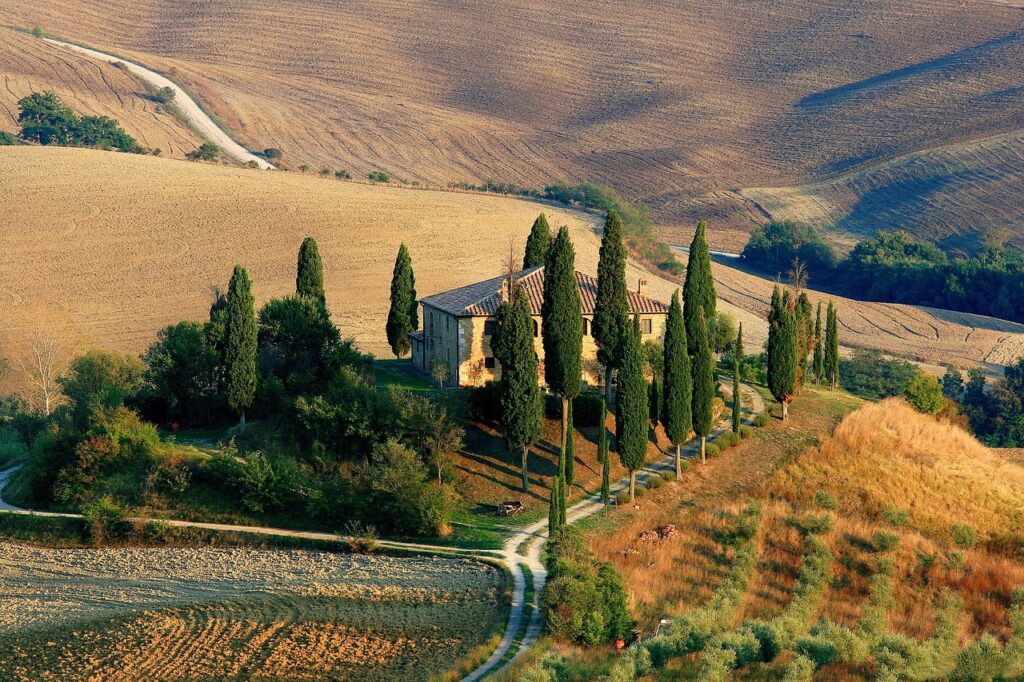
Tuscany instantly brings to mind rolling hills, lone cypress trees, medieval villages and world-famous wines like Brunello di Montalcino or Chianti Classico. Yet beyond the classic tourist trails and the headline appellations lies a more secretive wine-country Tuscany — a landscape of minor backroads, family-run estates and rare grape varieties planted on forgotten slopes. These off-the-beaten-path wine routes deliver a different kind of sensory experience: intimate tastings, rustic cellars, meetings with passionate winemakers, and vistas where even the silence seems to sharpen a wine’s aroma.
This guide takes you through lesser-known routes in Tuscany with concrete stops — full estate names and monuments, exact addresses, opening hours and prices in euros — so you can realistically plan an immersive itinerary. Expect micro-appellations around Suvereto and Bolgheri, biodynamic estates in the Val d’Orcia, family-run cantinas near Cortona, and historic cellars tucked into narrow village lanes. Each stop is described in detail with local tips (best times to visit, transport recommendations, tasting etiquette and crowd-avoidance tricks).
The suggested routes favor slow travel and discovery: sunrise shots among vineyards, walks between olive trees and cypresses, picnics built from local produce, and nights in small-scale agriturismi. You’ll also find ideas to combine winery visits with cultural excursions — medieval castles or rural thermal baths — so you can build a well-rounded trip. Whether you’re an amateur oenophile, a curious traveler or a couple seeking authenticity, these off-the-beaten-path itineraries reveal a more intimate Tuscany where wine is savored as much for its story and terroir as for its taste.
Finally, this article includes visual markers

that will help you picture the landscapes and plan your shots. Practical details — exact addresses, prices in euros and opening hours — have been gathered to ease booking and logistics. Follow these off-the-beaten-path wine routes to rediscover Tuscany away from tourist buses, taking the time needed to fully appreciate every glass.
The secret Tuscan coast: Bolgheri, Suvereto and the Maremma vineyards
The Tuscan Maremma on the coast hides winemaking treasures that often live in the shadow of Italy’s more famous labels. Start in Bolgheri, known for its vineyards along the Viale dei Cipressi, then head to the more intimate town of Suvereto, home to biodynamic estates and family cellars. While Bolgheri hosts some iconic wineries, the smaller producers nearby promise more authentic encounters.
Recommended visit: Tenuta Guado al Tasso, often associated with the Antinori group, but for a more off-the-beaten-path experience prefer Azienda Agricola Sergio Mottura (an example of a small-scale operation). Address: Via Bolgherese, 33, 57022 Bolgheri LI, Italy. Hours: typically by appointment, Monday to Saturday 10:00–18:00 (book by phone). Tasting: around €20 to €35 per person for a selection of 3–5 wines.
In Suvereto, visit Azienda Agricola Poggiarello (a representative local producer) at Via dei Molini, 12, 57028 Suvereto LI, Italy. Hours: visits by reservation, usually between 10:00 and 16:00. Tasting fee: €15 to €30. The experience is often rounded off with a stroll through the vineyards at dusk — perfect for photographing the evening light as it deepens the vineyards’ ruby hues.

Practical tips: drive slowly — coastal and secondary roads can be narrow and winding — and favor a compact car or a van. During high season (July–August) book tastings two to three weeks in advance. The maritime climate brings salty breezes that noticeably influence the wines, often adding iodized notes and a refreshing lift — ideal with local fish and shellfish. For accommodation, choose stone-built agriturismi like Agriturismo Le Sughere, Via delle Sughere 7, 57020 Castagneto Carducci LI — typically €80–€150 per night depending on season.
Val d’Orcia and its micro-appellations: Montalcino and biodynamic producers
The Val d’Orcia is synonymous with iconic landscapes and powerful wines, but beyond the famous Brunello di Montalcino there are biodynamic estates and family cellars that prioritize sustainability and authenticity. Start in Montalcino, then explore the side roads that lead to small holdings in the southern part of the area.
Key stop: Castello Banfi – Tenuta Poggio alle Mura, address: Strada di Sesta, Poggio alle Mura, 53024 Montalcino SI, Italy. Hours: shop open Monday–Sunday 9:00–19:00; visits and tastings by reservation, typically 10:00–16:00. Guided tours and tasting fees: €25 to €60 depending on the package (Brunello tastings included in the higher-level options). The castle grounds host a wine museum and an impressive cellar that tell the story of the terroir.
For a more intimate perspective, head to Azienda Agricola Paolo Bea, Via Pietraviva, 1, 53024 Montalcino SI, Italy. This producer, celebrated by enthusiasts for natural methods, mostly welcomes visitors by appointment. Hours: visits by reservation between 9:30 and 17:00. Tasting: €20 to €40. The atmosphere is rustic; tastings sometimes take place in a stone kitchen, featuring minimally filtered wines with strong terroir expression.
Local tips: visit in spring (April–May) or autumn (September–October) to avoid summer crowds. Val d’Orcia roads sometimes include unpaved tracks — a vehicle with decent ground clearance helps. Bring closed-toe shoes for cellar tours on earthen floors and consider booking lunch at a local trattoria (e.g., Trattoria il Leccio, Via S. Antimo, 4, 53024 Montalcino SI — typical dishes €10–€25) to enjoy classic pairings like melanzane alla parmigiana, pici al ragù and other regional specialties.
Chianti Classico, reimagined: backroads and big surprises
Chianti may be Tuscany’s best-known wine region, but by taking secondary roads — the strade bianche and cypress-lined lanes — you’ll find less-publicized estates producing excellent wines. Instead of stopping only in Greve in Chianti, make time for Castellina in Chianti, Radda and the areas around Gaiole where small treasures hide.
Sample stop: Azienda Agricola Castello di Albola, Castello d’Albola, 53013 Gaiole in Chianti SI, Italy. Hours: cellar open to the public Monday–Saturday 10:00–17:00, guided tours by reservation. Tasting: €15 to €45 depending on the wine selection and presence of vertical tastings. The medieval setting of Castello d’Albola, perched on a hill, offers a panoramic backdrop perfect for a terrace tasting.
For a more rustic experience, try Azienda Agricola Fattoria La Vialla, Via di Prataglia, 14, 52046 Arezzo AR, Italy — although located in Arezzo province, La Vialla keeps close ties to Chianti traditions. Shop and farm hours: 9:00–18:30, visits and tastings by appointment. Farm products and wines are available; tastings around €10–€25.
Practical advice: a meal after a Chianti tasting should include bistecca alla fiorentina and pecorino cheeses. If you plan to visit multiple estates, schedule a lunch break and space out tastings (2–3 estates per day max). Many wineries don’t serve food, so pick up local snacks at village markets: salami, schiacciata, cheeses and olive oil.

Cortona and the eastern hills: high-altitude wines and family cellars
The area around Cortona, in eastern Tuscany, produces wines influenced by higher altitudes and clay-limestone soils. Vineyards here offer views that mix chestnut forests and cultivated hills. Cellars are often small family-run operations where tastings are held around wooden tables — perfect settings for conversation.
Gateway: Azienda Agricola Fonterutoli, while traditionally linked to Chianti, Fonterutoli’s cellar maintains an annex near Cortona that offers more intimate tastings. Address: Località Fonterutoli, 53013 Castellina in Chianti SI (main office); for Cortona favor local producers like Tenuta il Pozzo, Via delle Quattro Strade, 12, 52044 Cortona AR, Italy. Hours: visits and tastings by reservation, usually 10:00–17:00. Tasting fees: €12 to €30.

Local tips: pair a cellar visit with a walk through Cortona’s historic center (Piazza della Repubblica, 52044 Cortona AR). The MAEC museum (Museo dell’Accademia Etrusca e della Città di Cortona) at Piazza della Repubblica 8, 52044 Cortona AR is open Monday–Sunday 9:30–19:30; entry fee about €6–€10. After a tasting, treat yourself to a local dessert like castagnaccio, found in town bakeries. A car is essential here: roads are hilly and public transport links remain limited.
Practical tips for planning your off-the-beaten-path wine route
Planning an off-the-beaten-path itinerary means following a few simple rules to fully enjoy and respect local producers. First, booking is essential. Many small cellars don’t accept walk-ins; call or email at least a week ahead, and two to three weeks in high season (July–August, harvest time in September–October). Prices vary: expect on average €15–€40 per person for a standard tasting and up to €60–€100 for verticals or in-depth visits that include food pairings.
Second, driving: choose a designated driver or book private transfers. Secondary roads are often narrow and winding; a compact car is recommended. Some estates offer shuttles from main stations (Siena, Arezzo, Grosseto) — ask when booking. Third, respect the producer’s rhythm: tastings are moments of sharing, often held in kitchens or private parlors, so be curious and courteous.
Finally, think about accommodation: favor agriturismi and small B&Bs for a full immersion. Verify and book addresses in advance. Bring reusable bags to carry bottles and local products — many wines bought directly at the estate come with a small discount or special commemorative labels.
CONCLUSION
Taking Tuscany’s off-the-beaten-path wine routes means choosing a slower, more human experience rich in discoveries. You’ll spend days crossing immortal landscapes, evenings chatting with winemakers who will tell you about their land, and nights in accommodations where rural silence reminds you why these wines taste so singular. The addresses and practical details provided — from Castello Banfi to family cellars around Cortona and the Maremma’s micro-appellations — are meant to help you build a balanced itinerary of visits, tastings and culinary discoveries.
Traveling off the tourist circuit requires slightly different organization: booking ahead, respecting local traditions, and a willingness to adapt plans to weather or producer availability. But it’s worth it: you’ll be rewarded with small-group tastings, deep explanations of winemaking methods, and often the chance to buy cuvées unavailable outside the estates. These routes reveal a truer Tuscany, where wine is product, heritage and social bond. The result: a trip that feeds the senses, curiosity and connection to place.
Pack your bags, book your tastings and go slowly. Let the white roads between cypresses and olive groves guide you, and don’t forget to take the time to look, smell and savor — in Tuscany, every glass tells a story.

