






Introduction: Why Visit Florence’s Museums in Tuscany
Florence (Firenze) isn’t just the capital of Tuscany — it’s an open-air museum, the cradle of the Renaissance where history, art and architecture layer themselves on every street corner. But to truly grasp the city’s artistic wealth, you need to step inside its museums: from hushed gallery rooms to palaces converted into state museums, each venue tells a different story — from the early Italian masters to geniuses like Michelangelo, Botticelli and Leonardo da Vinci, among many others. This article is a practical, detailed guide to Florence’s must-see museums, with exact addresses, opening hours, indicative prices and local tips to make the most of your visit.
Florence attracts visitors from all over the world; queues can be long, especially in high season (April–October). Booking tickets in advance is often essential to avoid spending hours at the ticket desks. Admission prices vary with the season, temporary exhibitions and ticket categories (full price, reduced, free for certain groups), so I provide indicative fares and tips to save money or get priority access. Beyond the numbers, each museum has its own atmosphere: the almost theatrical light in the Uffizi galleries, the intimate emotion of the Galleria dell’Accademia facing the David, the sculptural density of the Bargello and the palatial sweep of Palazzo Pitti and the Boboli Gardens.
This guide offers a practical, sensory immersion: descriptions of the rooms and major works, how to get there on foot or by public transport, typical opening times and prices in euros, plus local tips — best times of day, which rooms to prioritise, and how to combine visits in one day to save time. For discerning travelers, it also includes recommendations on audio guides, private guided tours and how temporary exhibitions can affect the visitor experience. Whether you’re an art lover, student, photographer or simply curious, Florence’s museums offer unforgettable experiences: bring comfortable shoes, your curiosity and a notebook — Tuscany awaits.
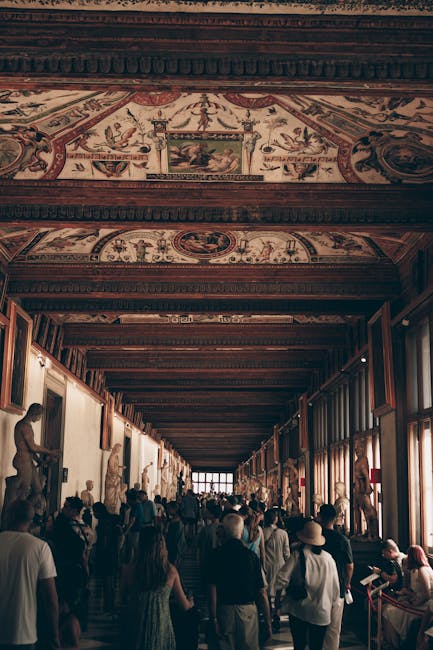
1. Gallerie degli Uffizi — The Uffizi Gallery
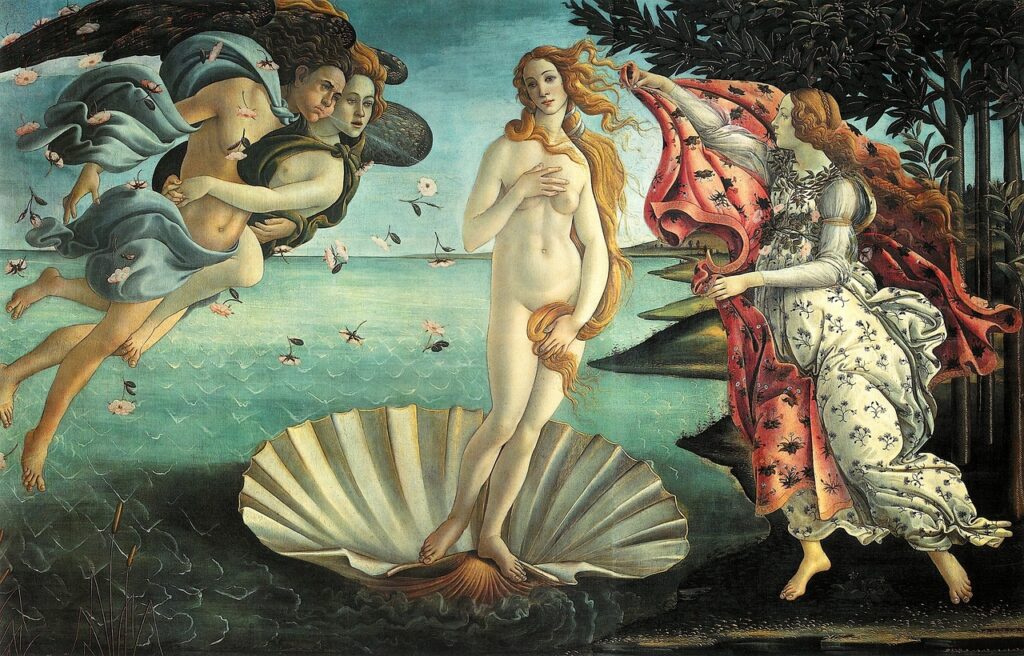
The Gallerie degli Uffizi is arguably Florence’s most famous museum and home to one of the world’s greatest painting collections. Housed in the Palazzo degli Uffizi, it brings together Renaissance masterpieces and earlier works, including iconic paintings like Sandro Botticelli’s The Birth of Venus and Primavera, Leonardo da Vinci’s Adoration of the Magi, and major canvases by Raphael, Titian and Caravaggio.
Address and access
Address: Galleria degli Uffizi, Piazzale degli Uffizi, 6, 50122 Firenze FI, Italy.
Access: a 5–10 minute walk from the Ponte Vecchio and Piazza della Signoria. Bus lines: ATAF M1, 7, stop « Viali » / « Ponte Vecchio » depending on the route.
Opening hours and prices
Opening hours (subject to change): open Tuesday–Sunday, 08:15–18:30; closed Monday.
Indicative prices (2024–2025): full price €20, reduced €2 (youth, EU conditions apply), online booking fee around €4 per ticket. Occasional free admission for certain categories. Temporary exhibitions may add a surcharge.
What to see and why
Visits are often organised chronologically: medieval and early rooms lead into the brilliance of the Florentine Renaissance. Don’t miss:
– Botticelli: The Birth of Venus and Primavera — two landmark works for understanding the humanist ideal and the revival of classical mythology in the Renaissance.
– Leonardo da Vinci: studies and assembled paintings — note his use of sfumato and subtle shadowing.
– Portraits and allegories: Raphael, Titian, Holbein, offering a panorama of the evolution of European painting genres.
The rooms are arranged to encourage contemplation: carved ceilings, filtered natural light and protective glazing that preserves pigments.
Practical tips
- Book ahead: skip-the-line tickets are available online — save hours of waiting, especially in summer.
- Early visit: arrive at opening (8:15) to enjoy less crowded rooms and softer light on the paintings.
- Plan: focus on 4–6 priority rooms if you only have a half-day.
- Audio guide: available in multiple languages; useful for contextual explanations about the Vasari collection and historical continuity.
2. Galleria dell’Accademia di Firenze — The Accademia Gallery
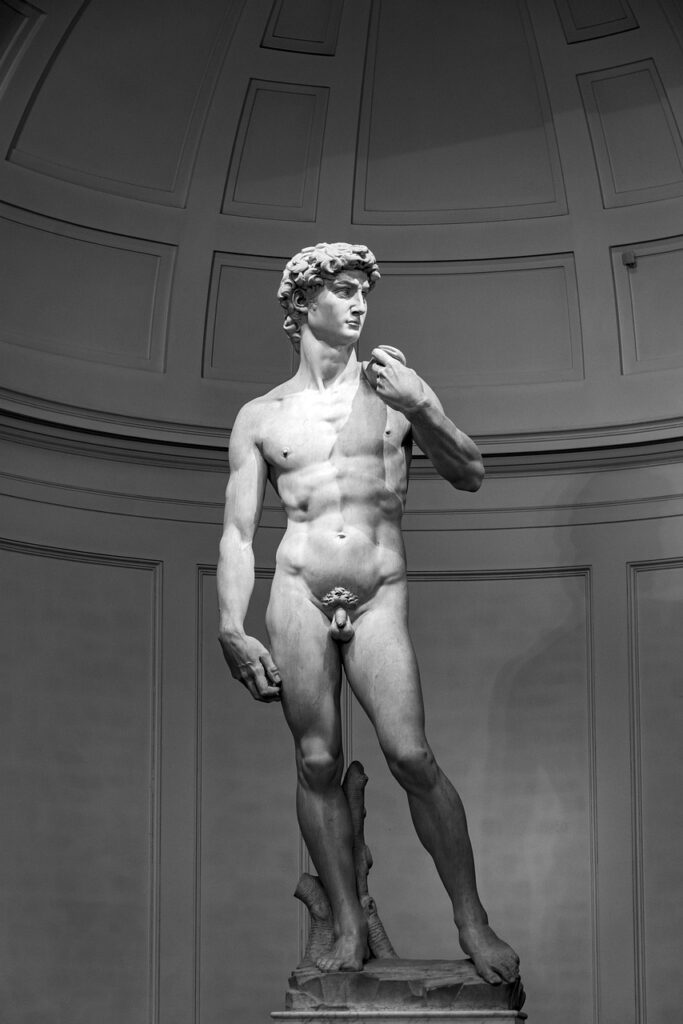
The Galleria dell’Accademia is world-famous for Michelangelo’s David, but its appeal goes far beyond this single iconic sculpture. Founded to train artists, the museum now houses collections of sculpture, painting and musical instruments (including a set of Amati and Stradivari violins). The setting is more intimate than the Uffizi: rooms devoted to sculpture and technical study give a close-up view of artistic process.
Address and access
Address: Galleria dell’Accademia di Firenze, Via Ricasoli, 58/60, 50122 Firenze FI, Italy.
Access: a 10-minute walk from the Duomo (Piazza del Duomo). ATAF bus lines 6, 7, stop « Duomo » depending on direction.
Opening hours and prices
Opening hours (subject to change): Tuesday–Sunday, 08:15–18:50; closed Monday.
Indicative prices: full price €12, reduced €2 (youth/EU conditions). Online booking fees around €4–€6. Booking highly recommended.
What to see and why
– Michelangelo’s David (1501–1504): originally intended for the Piazza della Signoria, the sculpture is displayed in a large room that allows detailed study of its proportions, modeling and expression. Get close to examine the finish of the hand and the tension in the tendons.
– The Slaves (Prigioni) and unfinished Prisoners by Michelangelo — essential to understanding his process of « revealing » the form from marble.
– The musical instruments collection (Museo degli Strumenti Musicali) and sections of gothic and late Renaissance painting.
Practical tips
- Come early: even with a reservation, rooms can be crowded after 10:00. Opening time is ideal for photos and a calmer look.
- Look around: the original sculpture is protected but the room allows close observation — valuable for art students.
- Combine: Accademia + Duomo or the San Lorenzo market on the same morning on foot.
3. Museo Nazionale del Bargello — Bargello National Museum
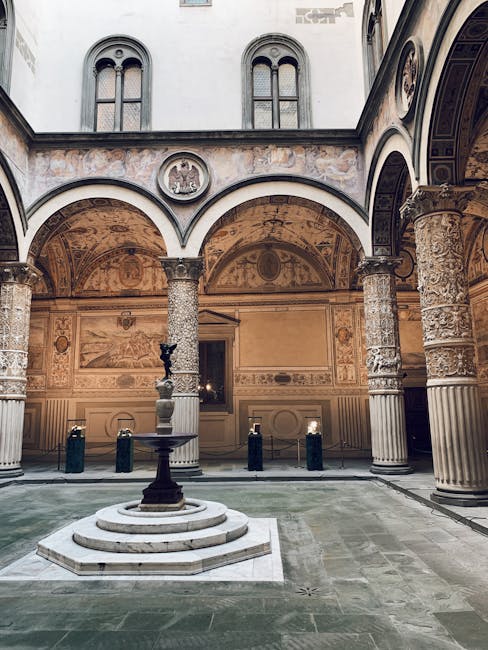
Housed in a 13th-century fortified palace, the Museo Nazionale del Bargello is the temple of Florentine and Italian sculpture, from the Renaissance to the early Baroque. Less crowded than the Uffizi and Accademia, the Bargello offers a quieter experience and allows a close study of sculpted works and decorative arts: bronzes, marbles and terracotta. The display highlights sculptural technique, from fully rounded statues to reliefs.
Address and access
Address: Museo Nazionale del Bargello, Via del Proconsolo, 4, 50122 Firenze FI, Italy.
Access: a stone’s throw from Piazza della Signoria and the Duomo. Buses and trams serve the historic center — stop « Duomo » or « Porta al Prato » depending on the line.
Opening hours and prices
Opening hours (subject to change): Tuesday–Sunday, generally 08:45–14:00 — reduced hours on some days, closed Monday. (Check before you go as morning hours may vary.)
Indicative prices: full price €7, reduced €3.50; temporary exhibitions may include a supplement.
What to see and why
– Michelangelo’s Bacchus (an early work), Donatello’s David-Apollo and especially Donatello’s bronze David (an earlier bronze version, often less well known than Michelangelo’s but essential for understanding the evolution of heroic portraiture).
– Michelangelesque bronzes and Luca della Robbia’s glazed terracotta reliefs show innovative uses of sculpture and colour.
– The medieval rooms of the palace provide an authentic setting: stone floors, a stern inner courtyard and stone staircases — the atmosphere is that of a fortress transformed into a museum.
Practical tips
- Quiet visit: ideal for sculpture enthusiasts who want to study surfaces and restorations without the crowds of larger museums.
- Combine: located immediately near Piazza della Signoria — perfect for a cultural afternoon with a terrace coffee break.
- Photography: rules vary; ask staff about restricted areas.
4. Palazzo Pitti and Giardino di Boboli — The Royal Palace and Gardens
The Palazzo Pitti, a vast Renaissance palace and former residence of Tuscany’s grand dukes, now houses several museums: the Galleria Palatina (Palatine Gallery), the Royal Apartments, the Museo degli Argenti (Silver Museum), and the magnificent Giardino di Boboli behind the palace. Together they combine paintings and decorative arts with sumptuous interiors and spectacular landscaped gardens.
Address and access
Address: Palazzo Pitti, Piazza de’ Pitti, 1, 50125 Firenze FI, Italy.
Boboli Gardens: main entrance Piazza de’ Pitti, 1 (access via Cortile del Cavallo or from Via Romana/Porta Romana). Access: cross the Ponte Vecchio from the historic centre, about 10–15 minutes on foot.
Opening hours and prices
Opening hours (subject to change): Galleria Palatina and Royal Apartments: Tuesday–Sunday 08:15–18:50; closed Monday. Boboli Gardens: generally open daily with hours that vary by season (spring/summer often 08:15–19:30).
Indicative prices: Galleria Palatina + Royal Apartments €16 full price; Museo degli Argenti may have separate fees. Boboli Gardens entry €10 (reduced €5–€8 for some categories). Combined passes (Palazzo + Boboli) available at a favourable rate around €20–€22.
What to see and why
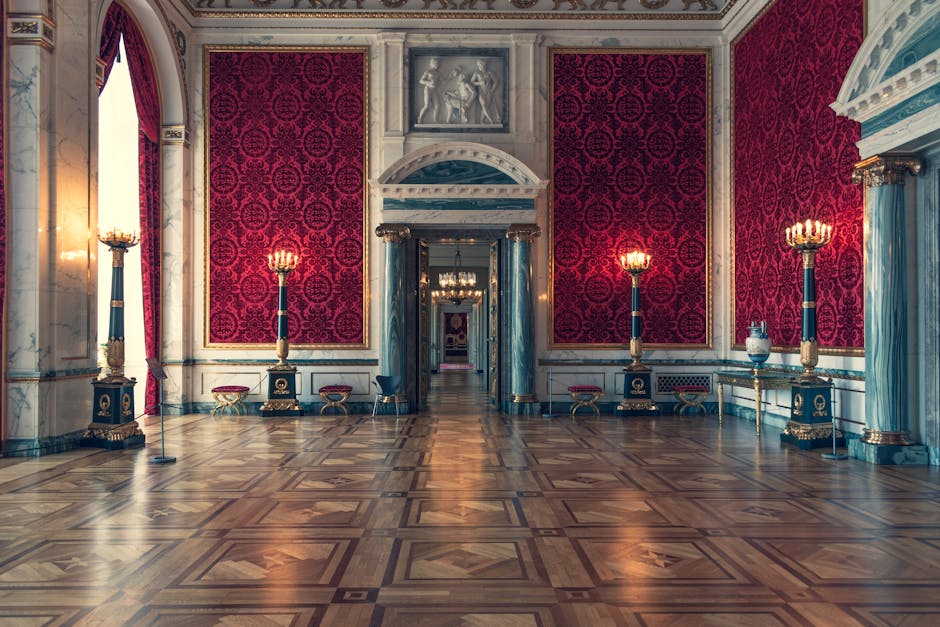
– Galleria Palatina: court portraits and canvases by Raphael, Titian, Rubens and a notable series of Baroque and Rococo works, shown in the princely furnished apartments. The setting — gilded salons, tapestries and painted ceilings — gives a clear sense of court life.
– Royal Apartments: discover the daily and ceremonial life of the Medici and later the Habsburg-Lorraine, with sumptuously decorated rooms and objets d’art.
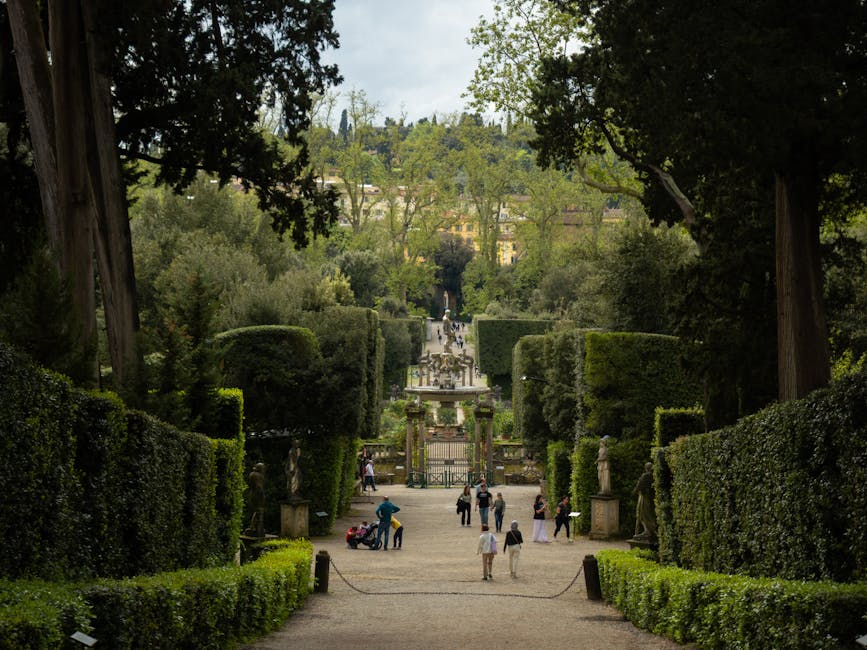
– Giardino di Boboli: one of Europe’s major Italian-style gardens, laid out from the 16th century. Stroll its paths between fountains (the Grotta del Buontalenti, the Fountain of Neptune), antique statues and panoramic views over Florence. It’s a perfect place to breathe after indoor museum visits.
Practical tips
- Time to allow: plan at least 3 hours for the Galleria Palatina + Royal Apartments, and 1.5–2 hours for Boboli if you want to wander. For a full experience, allow half a day.
- Comfortable shoes: the gardens are extensive and sloping — suitable footwear is recommended.
- Combine: start with the indoor rooms in the morning (cooler and less crowded), then finish with Boboli in the afternoon when the light best showcases the sculptures and garden perspectives.
Conclusion: Planning Your Museum Itinerary in Florence
Florence packs exceptional museum riches into a compact area: in just a few days you can visit major institutions that tell the story of Western art. To optimise your trip, prioritise according to your interests (painting, sculpture, decorative arts, gardens) and your pace: a morning at the Uffizi, a sculptural perspective at the Bargello, the frontal awe of the David at the Accademia, and a princely afternoon at Palazzo Pitti capped by a walk in the Boboli. Distances are short: combine visits on foot to enjoy the city’s architecture and cappuccino stops in historic cafes.
Always book online for the most in-demand museums (Gallerie degli Uffizi, Galleria dell’Accademia and some spaces at Palazzo Pitti), factor in opening times and weekly closures (often Monday), and check for reduced or free admission if you are a student, teacher, EU resident or senior. Official tourist offices and museum websites publish the latest information on prices and hours — I recommend checking 48–72 hours before your visit to avoid surprises.
Finally, leave room for the unexpected: a small gallery discovered in the Oltrarno neighbourhood, a temporary exhibition that reshuffles your plans, or a long sunset pause from Piazzale Michelangelo. Florence reveals itself as much in its museums as in its lanes: every visit offers a new perspective on Tuscany and its unique heritage. Enjoy your cultural trip — and don’t forget to bring a notebook to jot down the works that moved you most.