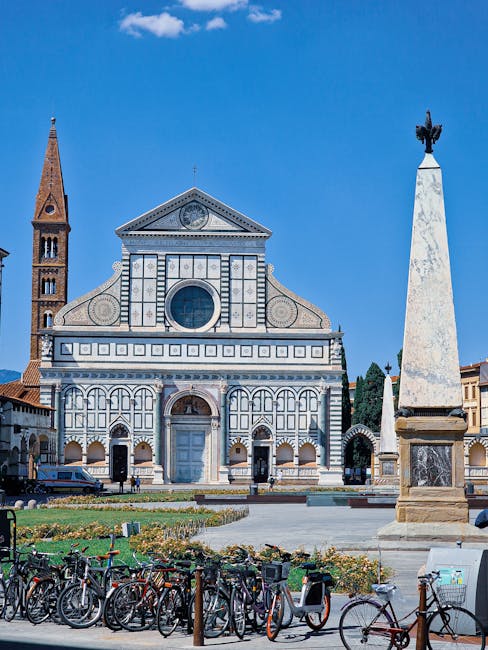






Introduction: Why Choose a Sunrise Photo Route Through Tuscany’s Hilltop Villages
Tuscany is a visual poem: rolling hills, lone cypresses, terracotta roofs and medieval hilltop villages that seem frozen in time. Shooting the Tuscan borghi at dawn is almost magical: the low morning light enhances stone textures, the early mist drapes the valleys, and the lack of crowds lets you own the alleys as if history were private. A well-planned photo route makes the most of these moments by pairing iconic sights with lesser-known viewpoints, taking opening hours of monuments into account, figuring out the best spots for light, and handling logistics like parking and café opening times for breakfast.
Beyond the aesthetic, sunrise photography demands real preparation: know the exact time of sunrise (it changes with the seasons), pack the right gear (tripod, filters, spare batteries), check local weather and learn a few rules for respecting places and residents. The borghi still have daily life: morning markets, artisans opening their shops, women sweeping doorsteps. Being discreet helps you capture authentic human moments without disrupting routines.
In this guide I offer a route designed for sunrise photography, with stages that realistically fit into one or two days depending on your pace. For each stop you’ll find: the full name of the site, the exact address, opening hours and indicative prices for main monuments, an immersive description of photographic viewpoints, and practical local tips (parking, transport, best angles, drone precautions). The itinerary favors emblematic borghi like Monteriggioni, San Gimignano, Volterra, Pienza and Montalcino, but the logic is portable: pick a hilltop village, a vantage over the valley, and a historic site open early to vary your shots. Plan to drive for flexibility: most borghi are connected by small scenic roads where you’ll want to stop often.
Lastly, remember that travel photography in historic areas calls for responsible behavior: respect opening hours, don’t block access, avoid private areas at sunrise and always ask before taking close-up portraits. With these precautions, each sunrise can turn into a set of unique images — golden light, bell-tower silhouettes and perspectives over vineyards or wheat fields. Prep your gear, set your alarm, and go meet a sleeping Tuscany ready to reveal itself through your lens.
Practical Preparations and Gear for a Successful Sunrise
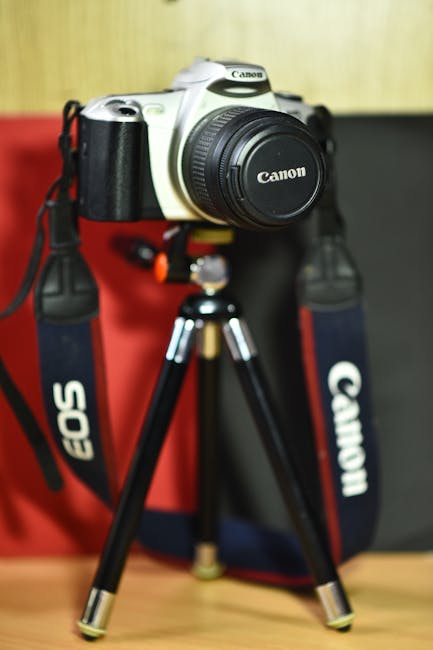
Before you start a sunrise photo route, organization and equipment are key to getting sharp, inspiring images. Must-have gear: a camera body with good high-ISO performance, a sturdy tripod (cobbled streets and hilltop winds demand stability), at least two lenses (a 16–35mm wide angle for landscapes and a 70–200mm to isolate towers or architectural details), spare batteries and memory cards, a remote shutter release, and filters (graduated neutral-density to balance sky and ground, a polarizer to boost sky color). Also bring a weatherproof bag and a small headlamp to move around in the dark before sunrise.
Logistics: check the exact sunrise time for your chosen day (apps like PhotoPills or The Photographer’s Ephemeris are handy). Factor in travel time between borghi: for example, Monteriggioni to San Gimignano takes about 35–45 minutes by car (~25 km), then San Gimignano to Volterra around 40–50 minutes (~30 km); these estimates vary by season and local roads. Parking: favor public parking shown on Google Maps or peripheral lots (park-and-ride or « parcheggio »). Many historic centers are ZTL (limited-traffic zones): check in advance to avoid fines. If you’re staying inside a borgo, ask your accommodation for a temporary permit or pass to access the center early.
Legal and safety aspects: drones are increasingly used for aerial shots but are strictly regulated in Italy, especially near historic monuments and inhabited zones. Check ENAC rules (Ente Nazionale Aviazione Civile) and obtain local permissions if needed. Obey « vietato l’ingresso » (no entry) signs and avoid private property at sunrise. Let local authorities or the tourist office know if you plan to stay long in an area, particularly during events.
Composition and weather tips: Tuscany’s mood shifts with the seasons. In autumn, Val d’Orcia mist is common and sublime; in summer the light at sunrise is harder but colors are saturated and warm. Look for leading lines (cypress-lined roads, stone walls, rows of vines) and elements of different sizes to add depth and scale. Try long exposures to soften mist or emphasize moving clouds. Arrive at least 45–60 minutes before sunrise to scout spots, test compositions and dial in settings.
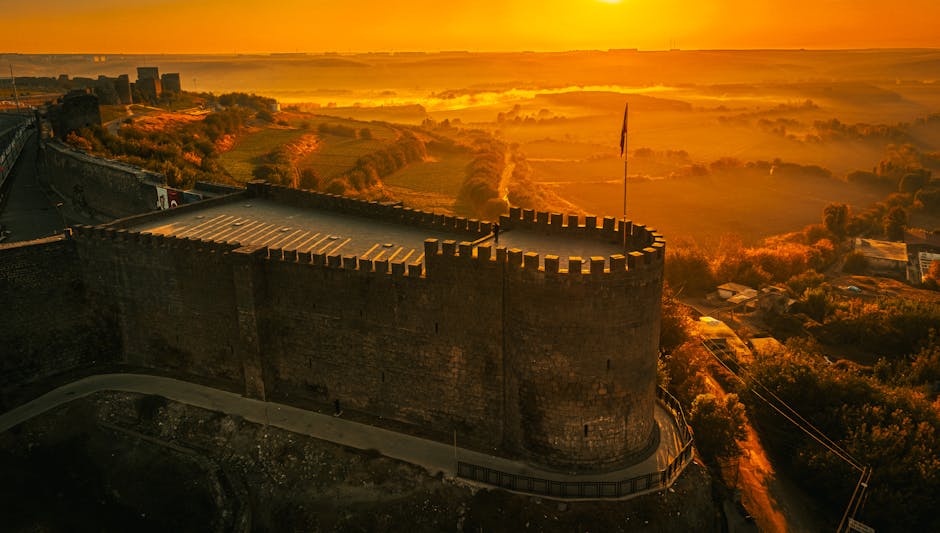
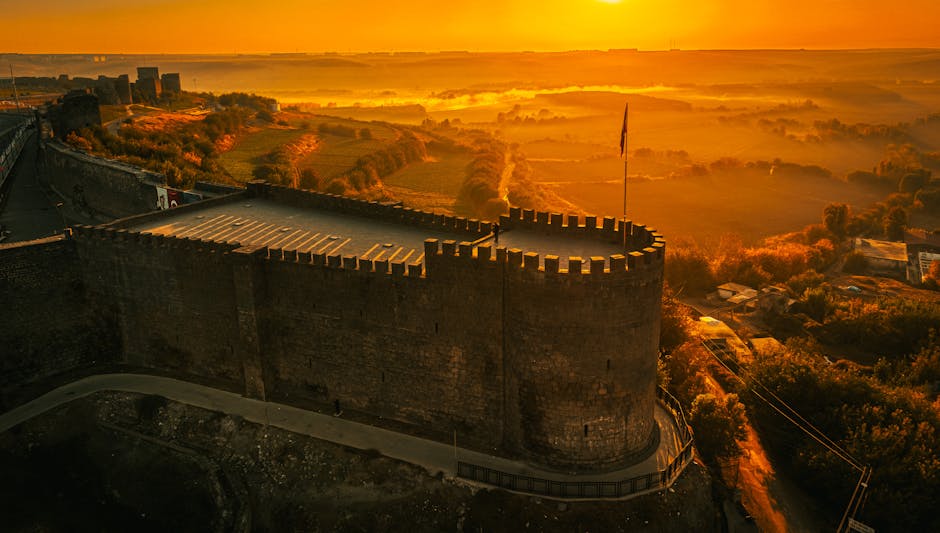
Stage 1: Monteriggioni — Medieval Walls and Panoramic Views
Monteriggioni is a fortified village on the Via Francigena, famous for its circular walls punctuated by towers. Full name: Castello e Mura di Monteriggioni. Address: Piazza Roma, 53035 Monteriggioni SI, Italy. Hours: the walls and exterior of the village are accessible 24/7 (free). The local museum, Museo Monteriggioni, is at Piazza Roma 1; hours vary by season (typically 10:00–18:00 in high season), museum admission around €3–€5. You can visit the medieval gate and the borgo at any time.
Photography-wise, Monteriggioni is perfect at sunrise for several reasons: the tower silhouettes cut into a golden sky, side light reveals stone texture, and the walls make easy curved leading lines toward the village core. For a wide composition, position yourself on SP7 between Castelnuovo Berardenga and Monteriggioni, at the first bend before the entrance, to capture the whole village with the countryside in the foreground. For details and street portraits, enter the small Piazza Roma and use the arcades and wooden doors as natural frames.
Practical tips: public parking « Parcheggio via Cavour » (via Cavour, 53035 Monteriggioni SI) is often paid in high season ≈ €1–€2/hour; bring coins. If you want a higher viewpoint, climb to one of the motorcycle parking areas that overlook the village or look for a footpath along the hill to the northeast. Note: the center is pedestrian-only and some streets are narrow — don’t block access. Sunrise can attract drones; check with the town hall before flying to avoid fines. Nearby breakfast recommendation: Bar La Torre, Via Roma 12, 53035 Monteriggioni (cappuccino ≈ €1.20–€2.50, opens around 07:00 in high season).
Stage 2: San Gimignano — Medieval Towers and Picturesque Lanes
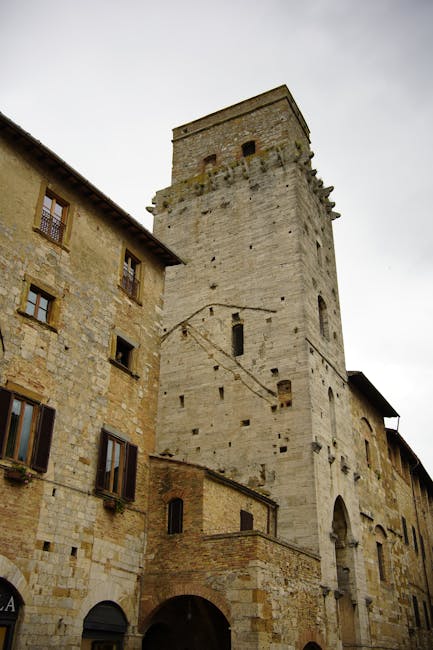
San Gimignano, nicknamed the « Medieval Manhattan, » is famous for its tower skyline. Key sites: Torre Grossa, Piazza del Duomo, Collegiata di San Gimignano. Address for Torre Grossa: Piazza del Duomo, 53037 San Gimignano SI, Italy. Hours and prices: Torre Grossa (Museo Civico) is typically open 10:00–19:00 in high season; combined ticket Museo + Torre Grossa ≈ €9–€12. The Collegiata di Santa Maria Assunta (Piazza del Duomo) often opens around 10:00; admission is usually free or donation-based depending on season. The tourist office (Ufficio Turistico, Piazza Duomo 1) opens early for local info.
Shoot San Gimignano at dawn to take advantage of side light sculpting the towers and to beat the crowds that fill Piazza della Cisterna and Via San Giovanni after about 09:00. Recommended starting point: the Rocca (Rocca di Montestaffoli) overlooking the town (Via Rocca, access on foot from Porta San Giovanni) — it offers a clear wide view of the towers with countryside behind. For more intimate shots, head down to Piazza della Cisterna (Piazza della Cisterna, 53037 San Gimignano) to capture cobbled textures and fountains bathed in soft light. Also try Via San Matteo for tighter perspectives of facades and balconies.
Practical tips: park at Parcheggio Piazza del Sale (Via Oliviera, 53037 San Gimignano SI) or Parcheggio Cimitero (Via S. Agostino); rates ≈ €1.50–€2.50/hour (seasonal). Watch for ZTL restrictions: vehicle access to the historic center is limited; follow signs to the parking areas. For an early coffee before dawn, Bar La Cisterna, Piazza della Cisterna 11, opens early (cappuccino ≈ €1.50–€2.50). If you plan to go up Torre Grossa, buy tickets in advance during peak season to avoid lines. For composition, use a telephoto to isolate towers and compress perspective, or a wide aperture to separate architectural details against a blurred background.
Stage 3: Volterra, Pienza and Montalcino — Contrasting Moods to Round Out Your Story
After San Gimignano, the route can branch to borghi with distinct atmospheres: Volterra with its austere, artisanal character; Pienza for Val d’Orcia panoramas; and Montalcino for its fortress and vineyards. Below are practical and photographic details for each.
Volterra
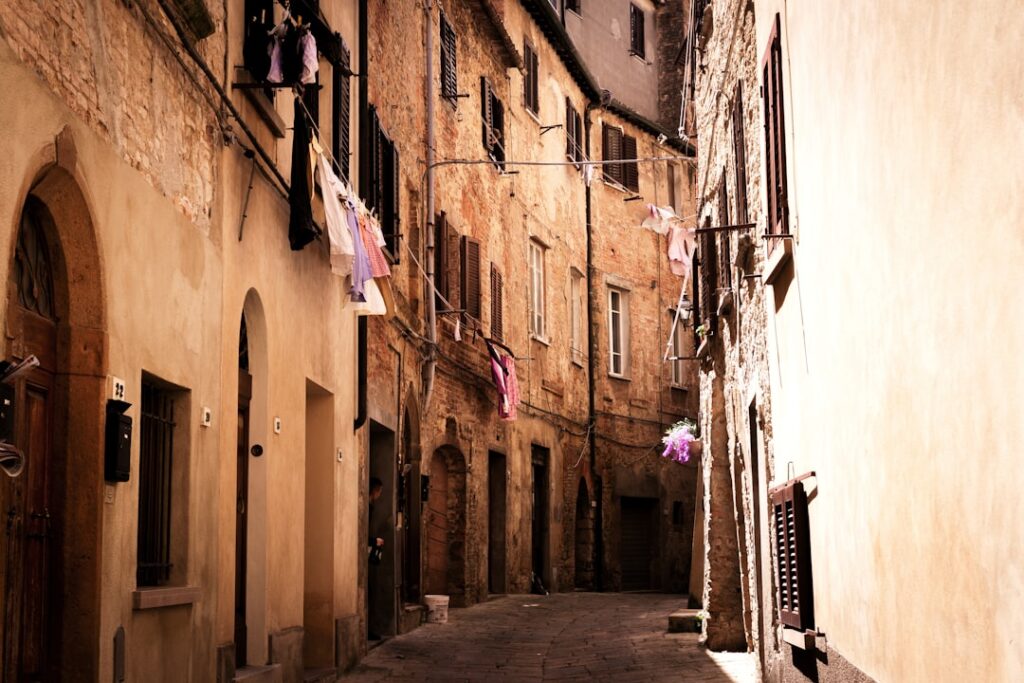
Full name: Città di Volterra — historic center and Palazzo dei Priori. Address Palazzo dei Priori: Piazza dei Priori, 1, 56048 Volterra PI, Italy. Hours: Palazzo dei Priori often open 09:00–18:00 (varies), admission ≈ €4–€7. Alabaster workshops (laboratori dell’alabastro) open in the morning for demonstrations (typical address Via Don Minzoni 1). Volterra is often wrapped in cool, dramatic light at sunrise — perfect for stony textures and ochre facades.
Photography: top dawn spots include Via San Francesco, Piazza dei Priori and the Porta all’Arco viewpoint overlooking the countryside. Look for compositions that use stone steps and heavy wooden doors. In the morning artisans often open their alabaster workshops — capture hands at work and fine dust highlighted by low-angle light for compelling reportage-style images.
Pienza
Full name: Città ideale di Pienza — Duomo di Pienza (Cathedral of the Assumption). Address Duomo: Piazza Pio II, 53026 Pienza SI, Italy. Hours: the cathedral and Piazza Pio II are freely accessible (donations possible), with some monuments and museums opening around 09:00–10:00; guided tours are available. Pienza is the perfect launching point to capture Val d’Orcia at sunrise: cypress-lined roads, terraced hills, and the famous Via dell’Amore offering panoramic countryside views.
Photography: for an iconic shot, position yourself on the terrace near Porta al Prato (east side of Piazza Pio II) and capture valleys filled with mist, framed by lines of cypress and solitary farmhouses. Golden light enriches wheat fields and olive trees. For portraits and details, Pienza’s narrow streets have painted doors and local shops displaying Pecorino di Pienza.
Montalcino
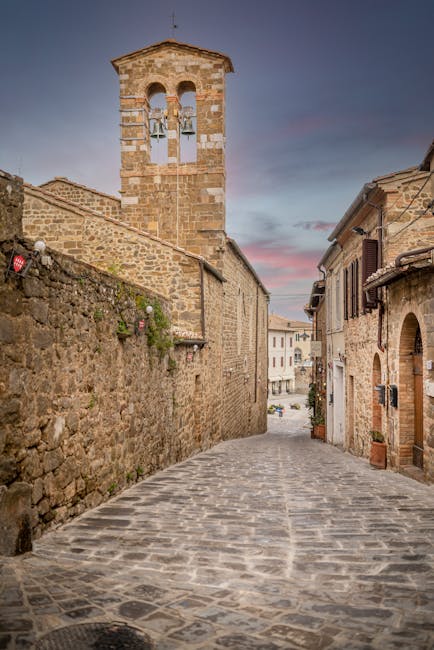
Full name: Fortezza di Montalcino and the Brunello vineyards. Address Fortezza: Piazza della Fortezza, 53024 Montalcino SI, Italy. Hours: Fortezza di Montalcino often open 10:00–19:00; the fortress is usually free to enter, while cellar tours and tastings are paid (tastings ≈ €10–€30 depending on the winery). Montalcino offers sweeping views of vineyards and hills that are ideal for capturing Tuscany’s wine country at sunrise. The fortress’ massive silhouette stands out against the morning sky.
Photography: the viewpoint from the rocca captures the expanse of Brunello vineyards under low-angle light. For detail shots, photograph vine rows and oak barrels in a cellar (with permission). Parking: Parcheggio Fortezza (Piazza della Fortezza) or peripheral lots; fees vary. Tastings usually happen later in the day — if you plan to sample Brunello, arrange to drive responsibly.
Practical tips for this cluster: chaining Volterra → Pienza → Montalcino is doable in one day but requires very early starts and tight time management. Check exact museum and tourist office hours; some places change hours off-season. Pack warm layers for dawn (hills can be chilly even in summer) and water. If you want a complementary sunset, Pienza and Montalcino are excellent spots to finish the day.
Local Advice, Safety and Final Recommendations for the Shoot
To wrap up this route, a few practical recommendations and commonsense rules to follow in the field: always check opening hours and local holidays (many churches and museums close on Mondays or have reduced hours off-season). Local tourist offices (Pro Loco) are excellent sources for parking, permits and event info. Carry small change; some village bars don’t accept cards for a morning espresso (average cappuccino price: €1.20–€2.50).
Transport and parking: driving is the most flexible option. Secondary roads can be narrow and winding; drive carefully and park only in authorized spaces to avoid fines. On-site public parking is often paid during high season (≈ €1–€3/hour). If you’re in a van or larger vehicle, favor peripheral parking and walk 10–20 minutes to get better framing.
Respect and ethics: always ask permission before photographing portraits. Some locals are sensitive about anonymity and the use of images on social media. In rural areas, respect crops and private property — don’t cross private fields without permission. If you plan to fly a drone, check with ENAC and the local municipality: many historic villages prohibit overflights without authorization.
Personal safety: temperatures can drop at dawn — bring a windbreaker and thin gloves for handling your gear. Keep your belongings close — narrow tourist streets can attract pickpockets. Consider travel insurance that covers photographic equipment. Be flexible: weather can completely change your plans; persistent mist can be more photogenic than a perfectly clear sky.
In short: start early, bring the right gear, research local hours and regulations, and respect the people who live there. With these precautions a sunrise route through the Tuscan borghi will reward you with timeless images — towers bathed in light, mist-covered valleys and artisans at work — and the feeling of having stepped into a living painting.
Conclusion: Turning a Sunrise into a Series of Memorable Images
Shooting the Tuscan borghi at sunrise is about finding the alchemy between light, place and moment. The suggested route — Monteriggioni, San Gimignano, Volterra, Pienza and Montalcino — covers a range of subjects: medieval fortifications, iconic towers, artisan streets, Val d’Orcia panoramas and Brunello vineyards. Each village has its own patterns, textures and moods; the key is to arrive early, observe, spot strong lines and wait for the « golden minute » that turns the ordinary into the sublime.
Beyond gear and technical skill, a successful sunrise shoot depends on patience and respect. The best shots often come from long waits — a sliver of light on a wooden door, a silhouette crossing a cobbled alley, a beam that makes alabaster dust sparkle. These moments are captured by being present but discreet, ready to seize the unexpected. Don’t forget to vary focal lengths and viewpoints: wide angle for context, tele for isolated details and a 50mm for intimate portraits.
Finally, think of this route as a beginning, not an end. Each visit will make you want to return in a different season, at another hour, or with a new perspective (night, rare winter snow, or harvest time). Italy — and Tuscany in particular — rewards repeated curiosity. Archive your images, study them, note the spots and settings that worked — those notes will help you refine future dawn shoots. Travel light, stay curious, and let Tuscan light tell your photographic stories.