





Introduction
Tuscany immediately brings to mind gently rolling hills draped in vineyards, cypress trees punctuating the landscape like graphic markers, medieval villages with cobbled lanes, and rustic kitchens celebrating seasonal produce. To really soak up this iconic region of Italy, slow travel — moving slowly, savoring, stopping — is the way to go. This detailed guide lays out a 5-day route for travelers who want to step away from frantic monument-checking and embrace immersive discovery: sun-paced strolls, stops at small farms, tastings at dusk and occasional cultural forays.
The goal isn’t to see everything, but to feel it: the hum of a medieval square at dawn, the warmth of a family trattoria, the scent of fields after rain, and the special light that makes Siena’s golden stone shimmer at blue hour. This plan balances slow countryside days with key urban stops — Florence for its masterpieces, San Gimignano for its towers, the Chianti region for vineyards, and the Val d’Orcia for postcard views.
Each day includes specific stops, exact addresses, opening hours, approximate prices and practical local tips: where to park, how to book, which bottles to buy, which dishes to order, and — above all — where to escape the crowds. Recommendations assume a mix of walking and driving, with two-night stays at selected spots to avoid constant hotel changes and encourage genuine relaxation.
A few practical tips before you start: rent a compact car (or a small SUV) to slip through narrow country roads; prefer provincial secondary roads (SP) over highways to enjoy the scenery; book must-see visits ahead of time (Uffizi Gallery, the Duomo dome) especially in high season; and carry some cash (euros) for purchases at local markets and tiny trattorie where cards can be less convenient.
This guide also highlights local gastronomy — where to taste an authentic ribollita, a bistecca alla fiorentina, or a selection of aged pecorino — and suggests slow activities: cycling through vineyards, an olive oil workshop, or simply reading on a piazza while watching Tuscan life pass by.
We start this trip from Florence, Tuscany’s cultural heart, and then gently head south through Chianti, San Gimignano, the Val d’Orcia, finishing in Montepulciano/Montalcino. Each stage includes precise addresses, hours, prices and handy tips so your five days become a true Tuscan interlude.

Day 1 — Florence: Art, Domes and First Flavors
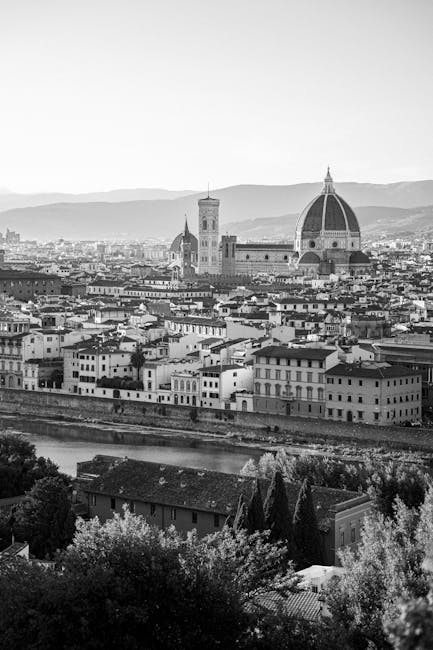
Start your slow travel in Tuscany in Florence (Firenze), a living museum where learning to choose matters. Instead of rushing, plan two major visits and leave plenty of open time to wander at the pace of the artisans. Your starting point: the Cattedrale di Santa Maria del Fiore (Florence Duomo).
Address: Piazza del Duomo, 50122 Firenze FI, Italy.
Opening hours: the cathedral is generally open Monday to Sunday from 10:30 to 16:30 (times may vary during services); the Duomo Complex (Opera del Duomo) (including the dome, museum and baptistery) opens from 08:15 to 19:00. Price: indicative « Duomo Complex » ticket €18.00 (standard fare, includes Museo dell’Opera del Duomo, Cathedral, Baptistery, Giotto’s Campanile, Complex); ascent of Brunelleschi’s Dome is included but requires a timed reservation (check online). Rates may change year to year.
Immersive description: the dome’s grandeur dominates the square; the Last Judgment frescoes by Giorgio Vasari and Federico Zuccari reveal themselves progressively as you climb. The adjacent Baptistery of San Giovanni contrasts with its bronze doors — including the famed « Gates of Paradise » reproduced in the Museo dell’Opera.

After the Duomo, stroll toward the Uffizi Gallery if you have a reservation (strongly recommended). Address: Piazzale degli Uffizi, 6, 50122 Firenze FI, Italy. Hours: typically 08:15 – 18:50 (closed on Mondays, check before you go). Price: standard ticket around €20.00 + €4.00 online reservation fee. The gallery is home to Botticelli’s Birth of Venus, Primavera, and masterpieces by Leonardo da Vinci, Michelangelo and Titian.
Practical tips: book timed tickets online, arrive early to avoid the crowds, and allow at least 2 to 3 hours for a relaxed visit. For lunch, favor small trattorie away from the main tourist arteries — for example, Trattoria Sabatino (Via dei Neri, 14R) for simple Tuscan cooking at reasonable prices.
End of day: cross the Arno via the Ponte Vecchio (Ponte Vecchio, 50125 Firenze FI) at sunset — the jewelry shops on the bridge take on a special glow. Dinner: try the bistecca alla fiorentina (order a portion for two) in a local osteria, paired with a Chianti Classico.
Logistics tips for Florence
- Parking: Parcheggio del Duomo Garage (Via Giorgio La Pira, 3, 50122 Florence) — approximate rate €3.50/hour; arrive early to find a spot.
- Reservations: buy official tickets on the « Opera di Santa Maria del Fiore » and « Uffizi » websites to avoid resellers.
- Walking: the historic center is very walkable; avoid driving in the ZTL (limited traffic zone) to prevent fines.
Day 2 — Chianti Classico at a Slow Pace: Greve to Castellina
On day two, leave Florence in the morning and head into Chianti Classico, the wine heartland of Tuscany. Take SP101 via Impruneta to reach Greve in Chianti: a slow drive through hills, vineyards and olive groves. Greve is an excellent base for a leisurely morning.
Greve in Chianti — central address: Piazza Matteotti, 50022 Greve in Chianti FI, Italy — is famous for its triangular square lined with arcades where markets and craft shops gather. Don’t miss the Enoteca Falorni (Piazza Matteotti, 22, 50022 Greve in Chianti) for wine tastings and local charcuterie. Hours: typically 09:00 – 19:00 (partially closed Sunday afternoons, check). Tasting prices: from about €10.00 for a selection of 3 wines.

From Greve, take the SP222 (the « Via Chiantigiana ») toward Castellina in Chianti. The road winds between estates and hills — stop for panoramic views and photos. In Castellina, wander along Via Ferrucci and visit the Rocca di Castellina. Address: Rocca di Castellina, Via XX Settembre, 1, 53011 Castellina in Chianti SI, Italy. Opening hours: the Rocca and its small museum usually open 09:00 – 13:00 and 15:00 – 18:00 (seasonal). Museum admission roughly €3.00 – €5.00.

Lunch: choose an agriturismo for a farm-to-table experience — for example Agriturismo La Poggiolina (Via Poggio al Vento, 3, 53011 Radda in Chianti SI, Italy) or a local bistro serving authentic Tuscan dishes. Try the ribollita (a hearty peasant soup) when available, paired with a Chianti Classico Riserva or an organic local wine.
Afternoon: visit a winery for a cellar tour and a leisurely tasting. Recommended: Castello di Ama (Località Ama, 53013 Gaiole in Chianti SI, Italy) — winery, contemporary art and tastings. Hours: guided cellar tours usually at 10:30 and 14:30 (by reservation); tasting prices roughly €25.00 – €35.00 per person depending on the package.
Practical tips: drive slowly and respect local speed limits (many stretches 50-70 km/h or 30 in villages); bring water and sunscreen; for tastings, book in advance and ask if tasting fees can be offset against bottle purchases. Stay one night in a relais or agriturismo to fully enjoy the quiet and the starry skies — the essence of slow travel.
Day 3 — San Gimignano and Volterra: Medieval Towers and Crafts
Today head to San Gimignano in the morning to admire its famous medieval towers, then push on to Volterra, less touristed but equally full of character. San Gimignano is often nicknamed « the Manhattan of the Middle Ages » — its towers create a distinct skyline visible from afar.
San Gimignano — historic center address: Piazza del Duomo, 53037 San Gimignano SI, Italy. Start at the Collegiata di San Gimignano (Duomo) (Piazza del Duomo) whose interior frescoes are remarkable. Hours: generally 10:00 – 18:00; Price: combined « San Gimignano » ticket (Collegiata, Torre Grossa, Civic Museum) approximately €10.00 – €15.00 (check on site).
Climb the Torre Grossa (Piazza del Duomo, 1) for panoramic views over the Tuscan countryside. Hours: often 10:00 – 19:00; Price: tower climb about €7.00 – €9.00. Afterward, wander the lanes and treat yourself to gelato at the famed Gelateria Dondoli (Piazza della Cisterna, 4) — a must-visit. Hours: 10:00 – 22:00; gelato price roughly €3.00 – €5.00 depending on size.

Then drive on to Volterra (about 40 minutes). Volterra is known for its Etruscan heritage and alabaster crafts. Visit the Museo Etrusco Guarnacci (Piazza Guido Rossi, 1, 56048 Volterra PI, Italy) — typical hours 09:00 – 19:00; Price: around €6.00 – €8.00. Stroll the Piazza dei Priori and climb up to the Porta all’Arco.

Tasting and dinner: Volterra has a few family-run osterie where portions are generous — try pappardelle with wild boar sauce (cinghiale) if available. Slow travel tip: reserve a table for dinner and take an after-sunset walk to see the town virtually empty, revealing its quiet magic.
Day 4 — Val d’Orcia: Landscapes, Pienza and Bagno Vignoni
Val d’Orcia embodies the idealized Tuscan landscape: cypress-lined hills, hilltop hamlets and UNESCO-listed villages. Spend a full day in this region and drink in each panorama slowly.
Start in Pienza, a tiny Renaissance gem with intact charm. Town center address: Piazza Pio II, 53026 Pienza SI, Italy. Visit the Cattedrale di Pienza (Duomo) on the square (Piazza Pio II) and wander the streets filled with pecorino cheese shops. Hours: the cathedral is generally open 09:00 – 18:00; Price: often free entry or a suggested donation.
For lunch, stop at the Antica Macelleria Falorni (Via dell’Amore 5, 53026 Pienza SI) for charcuterie and cheese boards — perfect for a picnic with a view. Hours: typically 09:00 – 19:00; price for a charcuterie board from €12.00.
Next head to Bagno Vignoni, a unique thermal village where the main square is occupied by a medieval thermal pool (vasca). Address: Piazza delle Sorgenti, 53027 Bagno Vignoni SI, Italy. Walking around the pools is free; although access to modern spas is paid, the atmosphere is the real draw — ideal for a slow pause. Spa opening times vary (some facilities open 10:00 – 20:00). Public spa prices roughly €15.00 – €30.00 depending on services.
Afternoon: continue to the Abbazia di Sant’Antimo (Località Castelnuovo dell’Abate, 53026 Montalcino SI, Italy) — a Romanesque abbey set in the countryside. You may be able to attend sung offices (check times). Hours: services sometimes at 11:00 and 18:00; Price: usually free entry though donations are welcome.

Practical tips: Val d’Orcia is great for a day of cycling if you’re prepared for hilly roads; otherwise a car makes it easy to hop between viewpoints. Pack a picnic and hunt for a bench or low wall to watch the light shift over the hills — a quintessential slow travel moment. Buy local pecorino, honey and cold-pressed olive oil from village shops.
Day 5 — Montepulciano and Montalcino: Prestigious Wines and Fine Flavors
Finish your itinerary with two outstanding wine towns: Montepulciano and Montalcino. Both combine history, architecture and wines to be savored slowly — Vino Nobile di Montepulciano and Brunello di Montalcino.
Montepulciano — start at the Piazza Grande and the Cattedrale di Santa Maria Assunta (Piazza Grande, 53045 Montepulciano SI, Italy). Hours: generally 09:00 – 18:00; entry often free though an adjacent museum may charge about €3.00. Wander Via di Gracciano nel Corso and stop for a tasting at Enoteca il Molino (Via del Poliziano, 15, 53045 Montepulciano SI). Tasting prices: from about €12.00 for a selection of 3 wines.

For lunch, choose an osteria that highlights regional produce: gnocchi with wild boar sauce, cheeses and charcuterie. Afternoon: book a visit and tasting at a respected winery such as Avignonesi (Località Cervognano, 53045 Montepulciano SI) — visits by reservation. Price for tour + tasting typically €25.00 – €40.00.
Then head to Montalcino (about 45 minutes). Montalcino is synonymous with Brunello — a rich, structured wine often ranked among Italy’s finest reds. Visit the Fortezza di Montalcino (Piazza Ilio Barontini, 12, 53024 Montalcino SI, Italy) for views over the region and tastings inside the fortress itself. Hours: 09:00 – 19:00; entrance to the fortress around €5.00.
Winery recommendation: Biondi-Santi (via San Filippo, 7, 53024 Montalcino SI) — historic and emblematic for Brunello; visits and tastings by reservation, prices vary (often €30.00 and up for special tastings). Slow travel tip: buy a bottle of Brunello to enjoy later at leisure.
Final dinner: choose a table with a view and order local specialties paired with a Brunello or a Rosso di Montalcino. Take your time, savor each bite, reflect on the loop of your trip and let the Tuscan night settle in.
Final practical tips and recommendations for a successful slow travel trip
Slow travel calls for light but thoughtful planning: book the essentials (accommodation, major visits, tastings), but keep mornings or afternoons free for serendipity. Here’s a rundown of useful tips for a calm five-day stay in Tuscany.
- Car rental: favor a compact car (Fiat 500, Opel Corsa) or a small SUV for driving on secondary roads. Rent from reputable agencies in Florence (Amerigo Vespucci Airport) or downtown. Indicative rental rates: €35-70/day depending on season and model.
- ZTL areas: beware of limited-traffic zones (ZTL) in historic centers (Florence, Siena, Pienza…). Cameras automatically record plates; ask your accommodation if you can enter to unload and request permission if needed.
- Reservations: for the Florence Dome, Uffizi Gallery, winery tours and some agriturismo, booking ahead is crucial, especially from May to September.
- Money and payments: carry some cash (€50-150) for markets, trattorie and tiny shops; cards are widely accepted but very small places may prefer cash.
- Hours: many shops close for pausa (13:00 – 15:30); plan meals and visits accordingly.
- Language: Italian is the local language; a few basic phrases (hello, thank you, please) go a long way. English is often spoken in tourist areas.
- Local respect: dress appropriately for churches (shoulders and knees covered), and follow site and private property rules.
- Sustainability: favor local producers, buy regional products and avoid single-use plastics.
Recommended gear: comfortable walking shoes, sunglasses, a hat, a reusable water bottle, a portable charger and a small first-aid kit. Download offline maps via Google Maps or Maps.me for rural areas.

Conclusion
This five-day Tuscany route, built around slow travel principles, favors depth over breadth. Rather than ticking off landmarks, it invites you to feel the region: the warm stone of piazzas, the taste of freshly aged pecorino, the hush of a cypress-lined road at sunset. Florence provides the artistic intensity to understand the Renaissance; Chianti connects you to vine work and the ritual of wine; San Gimignano and Volterra echo with medieval and craft heritage; Val d’Orcia reveals the natural beauty that shaped the Tuscan imagination; Montepulciano and Montalcino close the trip on a contemplative and gastronomic note.
The key to slow travel is repetition: stay long enough in one place for the town or landscape to reveal something new on each walk. A trattoria found by chance can become your best memory, just as a roadside bench with an improbable view can. Don’t forget: the best discoveries are often those not on the map. Book the essentials (a few visits, the car, one or two tastings) and let the rest of your schedule breathe.
Finally, gather lasting souvenirs: a bottle of Brunello or Chianti bought at an estate, a carefully wrapped wheel of pecorino, or a photo captured when the light turns stone to gold. Tuscany rewards patient, attentive travelers — leave wanting to return, and you’ll take away from these five days not just photos, but the sensation of having truly lived the region rather than merely visited it.
