





Introduction: Why do a 3-day express road trip in Tuscany?
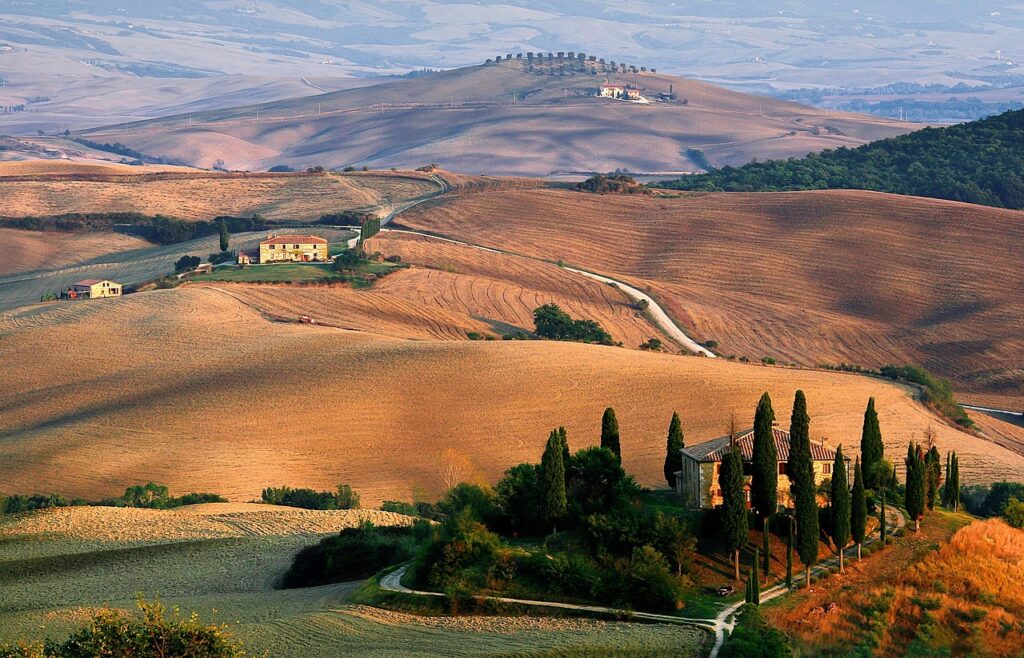
Tuscany is one of Italy’s most iconic regions: rolling hills, centuries-old vineyards, medieval villages, world-class museums and art cities like Florence, Siena and Pisa. You can’t see everything in three days — but you can put together a tight itinerary that captures the region’s essence: Renaissance art, bucolic Chianti and Val d’Orcia landscapes, medieval towers and delicious wine tastings. This road trip is aimed at those who want to make the most of time on the road without sacrificing the quality of the experiences.
This practical guide offers a day-by-day route with exact addresses, typical opening hours, entrance fees in euros, logistics tips (parking, tolls, secondary roads), and local recommendations for eating, drinking and squeezing the most out of every hour. The goal is to turn 72 hours into a coherent, comfortable and immersive loop that blends Florence’s artistic splendor, Pisa’s must-see leaning tower, and the gentle charms of Chianti villages, San Gimignano and the Val d’Orcia.
Plan on a compact car (streets can be narrow in historic centers), a good pair of shoes for tromping on cobblestones, and an offline navigation app — some secondary roads don’t always have reliable mobile coverage. And leave room to wander: Tuscany is meant to be soaked up, to sip a coffee in a piazza, and to linger over a sunset across the countryside. In the detailed itinerary below, each day includes opening hours and typical prices — but double-check before you leave, especially in low season or on public holidays.

Day 1: Florence — Renaissance masterpieces and city panoramas
Start your road trip in Florence (Firenze), the cradle of the Renaissance. Park in an outer lot like Garage Europa Firenze (Viale Giovine Italia, 50123 Firenze FI) for around €3–€4 per hour depending on season, then walk or take the tram into the center. Your first stop is the Cattedrale di Santa Maria del Fiore (Duomo di Firenze), on Piazza del Duomo, 50122 Firenze FI. Hours: usually 10:00–17:00 for the complex (the basilica itself may have different service times). Price: visiting the complex (dome, baptistery, museum) is about €20–€30 depending on options. Climbing the dome gives a spectacular view over the city (book ahead if you can).

Just a short walk away is the Galleria degli Uffizi (Piazzale degli Uffizi, 6, 50122 Firenze FI), home to masterpieces by Botticelli, Leonardo and Michelangelo. Typical hours: 08:15–18:50; closed Mondays. Price: standard tickets about €20–€25; booking is highly recommended to avoid long lines. After the Uffizi, cross the Ponte Vecchio (Ponte Vecchio, 50125 Firenze FI) and stroll along the Arno for picture-perfect sunset views.
End the day at the viewpoint of the Basilica di San Miniato al Monte (Piazzale di San Miniato al Monte, 50125 Firenze FI). Hours: 07:30–19:00; free entry to the church with small fees for certain areas. The terrace panorama at golden hour is well worth the short climb. Practical tip: book museums in advance and aim for early morning slots to enjoy the Duomo and the quiet streets before the tourist crowds swell.
Day 2: From Florence to Siena via the Chianti — villages, wine and medieval towers
Leave early for Siena via the Chianti route, immersing yourself in vineyards and olive groves. Take the SR222, known as the “Chiantigiana,” a scenic road perfect for stopping at wineries and tiny hamlets. First recommended stop: Castello di Brolio (Località Brolio, 53013 Gaiole in Chianti SI). Visiting hours: typically 09:00–17:00; guided tour and tasting cost around €15–€30 depending on the package. On-site you’ll find tasting options and a shop. It’s an excellent introduction to Chianti Classico, grape varieties and local history.
Continue to Greve in Chianti (Piazza Matteotti, 50022 Greve in Chianti FI) for lunch in the central square where you’ll find cheeses, cured meats and local wines. Afterward, head to San Gimignano, famous for its medieval towers. Visit the Torre Grossa (Piazza del Duomo, 53037 San Gimignano SI). Hours: 10:00–19:00 (seasonal variations). Fee: tower climb + museum about €10–€18. The ascent rewards you with sweeping views over the Tuscan plain and its iconic cypress trees.

Arrive in Siena in the late afternoon. Park outside the historic center (ZTLs are strictly enforced) and make your way to Piazza del Campo (Piazza del Campo, 53100 Siena SI), the shell-shaped square where the Palio is held. Wander up to the Cattedrale di Santa Maria Assunta (Duomo di Siena) (Piazza del Duomo, 53100 Siena SI). Hours: 10:00–19:00; the complex (museum, baptistery, terrace) costs about €10–€15. Tip: book a traditional Tuscan dinner (ribollita, pici al ragù) in a local trattoria and soak up Siena’s medieval atmosphere after dark.

Day 3: Val d’Orcia, Pienza, Montepulciano and a stop at the Leaning Tower of Pisa if needed
On your final day, head south early to reach the Val d’Orcia, the postcard-perfect heart of Tuscany. Start in Pienza and visit the Cattedrale dell’Assunta (Duomo di Pienza) on Piazza Pio II, 53026 Pienza SI. Hours: 10:00–18:00; entry to the nave is free, with occasional €5–€8 fees for the cloister or museum. Stroll the narrow streets and sample the famous pecorino di Pienza at local cheese shops.
Next, head to Montepulciano (Piazza Grande, 53045 Montepulciano SI), where you can tour historic cellars and taste Vino Nobile di Montepulciano. Some cellars offer tours and tastings starting from €10–€25. Walk around Piazza Grande to admire the Duomo di Montepulciano and the Renaissance facades.
If your flight or return route requires it, plan a stop in Pisa to see the Torre Pendente di Pisa (Leaning Tower of Pisa) on Piazza del Duomo, 56126 Pisa PI. Hours: 09:00–20:00 (subject to change); the ticket to climb the tower is about €20, the cathedral is free though donations are suggested for certain areas. Practical tip: reserve your slot to climb the tower in advance and arrive early to beat the crowds. If time is tight, choose between Montepulciano/Pienza and Pisa — they offer very different experiences (contemplative countryside vs. iconic tourist landmark).

Local practical tips, where to stay and estimated budget
Car logistics: rent a vehicle in Florence (agencies at Amerigo Vespucci Airport, Via del Termine, 50127 Firenze FI) or in town. Expect ZTLs (limited traffic zones) in most historic centers — signs and cameras ticket unauthorized entries. Prefer parking on the outskirts and walk into the centers. Budget for fuel and tolls: roughly €60–€120 depending on total kilometers driven.
Accommodation: choose a centrally located hotel in Florence for night one (e.g., around Piazza del Duomo), an agriturismo in Chianti or near Siena for night two, and a B&B in Montepulciano or Pienza for night three if you want sunrise time in the Val d’Orcia. Average prices: double room 3* in Florence €90–€180/night, agriturismo in Chianti €80–€150/night, Val d’Orcia B&B €70–€140/night depending on season.
Estimated daily budget (per person): museums and towers €50–€80, food (lunch, dinner, coffees) €40–€80, wine tastings €15–€30, shared tolls/fuel €20–€40. Approximate total for 3 days: €300–€700 excluding flights and accommodation.
Local tips: try the standing espresso at the bar to save money and live like a local; buy olive oil and wine directly from producers; respect siesta times in small villages and double-check museum hours (they may close early on certain days). Also download offline maps (maps.me, Google Maps offline) and carry some cash for small rural shops.

Quick checklist before you go
- Book museum and tower tickets in advance (Uffizi, Duomo, Torre di Pisa) — skip-the-line where possible.
- Check ZTLs and parking at your destinations — note GPS addresses of recommended lots.
- Car insurance and international driving vignette if needed.
- Comfortable shoes, layered clothing, hat and sunscreen.
Conclusion: Make the most of a tight but authentic itinerary
A 3-day road trip in Tuscany is a time challenge, but can be incredibly rewarding if you plan your days with care. By combining Florence, the Chianti road, San Gimignano, Siena, the Val d’Orcia and possibly Pisa, you’ll cross the region’s main facets: art and architecture, rural landscapes, gastronomy and wine, and timeless small towns. The key is to keep a pleasant pace — it’s better to fully live one beautiful moment (a sunset over Montepulciano, a tasting in a Chianti castle) than to tick off too many boxes and forget why you traveled.
Also think about post-trip souvenirs: bring home flavors (pecorino cheese, olive oil, bottles of Sangiovese), photos and intangible memories (a night stroll in Florence, the quiet of Val d’Orcia at dawn). And always double-check opening times and prices a few days before departure — Tuscany offers seasonal experiences and local surprises that are well worth incorporating into your plan.
With practical preparation, a comfortable car and a taste for savoring each stop, these three days in Tuscany can become a memorable little escape and a perfect roadmap for a longer return trip in the future.